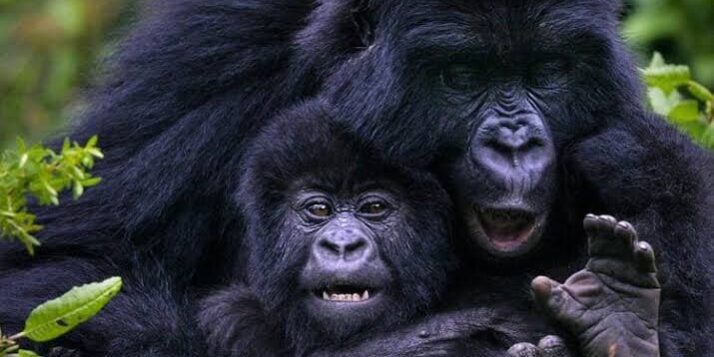
Rwanda is one of the leading primate destinations in Africa and the world at large. Primates are mammals with large brains, grasping hands, and forward-facing eyes. They include humans, apes, monkeys, lemurs, and tarsiers. Primates have flexible hands and feet with opposable thumbs and fingernails. They have large brains, color vision, they develop more slowly than other mammals of similar size but tend to have a longer lifespan.
Humans are very close relatives to primates like mountain gorillas. It is said that humans share 99% of their DNA with gorillas. Therefore, close interactions between humans and non-human primates (NHPs) can create opportunities for the transmission of zoonotic diseases. These include viruses like herpes, measles, Ebola, rabies and hepatitis. Thousands of non-human primates are used in research around the world because of their psychological and physiological similarity to humans. This makes them an endangered species according to the International Union for Conservation of Nature(IUCN).
Why are primates so special?
About 60% of primate species are threatened with extinction. Common threats include deforestation, forest fragmentation, monkey drives, and primate hunting for use in medicines, as pets, and for food.
Several organizations including the IUCN, Conservation International, and International Primatological Society are tirelessly working to protect these endangered creatures and their habitats. Their efforts include habitat conservation, research and education.
Most primates live in tropical or subtropical regions and for some reason, they love areas on or near the Equator.
Rwanda is one of the leading primate destinations in the world with the highest population of the endangered mountain gorillas worldwide. Other primates include baboons, golden monkeys, chimpanzees, vervet monkeys, blue monkeys, mantled guereza and greater bush babies.
1. Volcanoes National Park

Located in the north-western part of Rwanda, Volcanoes National Park is the leading primate destinations in the world .It is a protected area known for its incredible biodiversity and is home to the largest population of mountain gorillas in the world. There are over 600 mountain gorillas, about ⅓ of the global population. Other wildlife includes golden monkeys, black fronted duikers and over 200 bird species. Volcanoes NP borders Uganda’s Mgahinga NP and DRC’s Virunga National Park. It is one of the eight volcanoes of the Virunga Mountains and the climate there is tropical. It has two rainy seasons and average temperatures of 10⁰C to 20⁰C.
What is the procedure for gorilla trekking in Volcanoes National Park?
The major tourism activity in Volcanoes Np is gorilla trekking where visitors can track and observe mountain gorillas in their natural habitat. A gorilla trekking permit is needed if you’re interested in gorilla trekking and it costs 1500USD. It can be got from Rwanda Development Board or your tour operator may help you obtain one. These permits are limited and they run out very quickly so it is important to book in advance. An important reminder is that you need to be 15 years and above to participate in this activity.
Also on Volcanoes Np, get a chance to track and observe the golden monkeys. The permit for this is 100USD for foreign residents, 65USD for African non residents, and 18USD for East Africans.
Note that gorilla and golden monkey trekking involves hiking and climbing so be prepared with hiking gear. It is also advisable to be in good physical health. This is because you can’t hike when you’re sick and more still, these primates easily contract human diseases so it is for safety measures. Trekking starts very early in the morning so be at the park premises by 6:30am for a brief and then embark on your adventure.
For accommodation, there are a number of Lodges and hotels around the park and these range form budget friendly to luxury options. Your choice largely depends on your wallet.
2. Nyungwe Forest National Park

Nyungwe Forest National Park is a protected area in southwestern Rwanda bordering Burundi and Lake Kivu. It is known for its lush tropical rainforest and diverse wildlife, covering approximately 1,019km² and featuring Tropical forests with dense vegetation, waterfalls and scenic hiking trails. The climate km Nyungwe Forest is temperate with two rainy seasons and average temperatures ranging from 15⁰C to 25⁰C
Primates in this park include chimpanzees and black and white Colombus monkeys. The various plant species (about 1,000 of them) make them an ideal habitat for these primates because they are climbing and jumping mammals.
Chimpanzee trekking is a popular activity here where visitors get an opportunity to view chimpanzees in their natural habitat. The cost of a Chimpanzee trekking permit is 90USD for international visitors and can also be obtained from Rwanda Development Board.
Hiking is involved in this activity and while at it, explore the park’s scenic trails and spot various bird species and other wildlife. You may also participate in the canopy walk where a 200 metre long walkway is suspended above the forest offering breathtaking views of the surrounding. Just like gorilla trekking in Volcanoes NP, visitors must be 15 years and above, physically fit, have no contagious diseases. You must also respect the park’s rules and regulations as well as the wildlife and their habitats.
Nyungwe Forest has exquisite accommodation options and is considered a perfect honeymoon destination by many people.
Other primate destinations
- Gishwati-Mukura National Park for chimpanzee trekking
- Iby’Iwacu cultural Village to interact with former poachers turned conservationists and learn about primate conservation.
- Kirisimbi mountain for hiking and monkey spotting along the way.
These destinations offer unforgettable primate experiences, with opportunities to track, observe, and learn about various species in their natural habitats. Note that all these treks are guided so a guide fee is unavoidable but it is usually small. You may also hire a porter to carry your luggage if you can not hike while carrying luggage on your back.