

Rwanda, fondly known as the “Land of a Thousand Hills,” is a captivating East African country celebrated for its lush green landscapes, vibrant culture, and abundant biodiversity. Renting a car in Rwanda is one of the best ways to explore its scenic countryside, particularly for first-time or independent travelers. With a rental vehicle from Go Further 4×4 Car Rentals, travelers can enjoy the freedom to navigate Rwanda at their own pace, whether they’re embarking on a leisure trip or heading out on a wildlife safari. Based in Uganda, we specialize in providing reliable self-drive and chauffeur-driven 4×4 vehicles throughout Rwanda and the wider East African region.
Booking a vehicle through Go Further 4×4 Car Rentals is simple and flexible. Travelers can easily make online reservations through our website, where they can compare vehicle options, choose pick-up and drop-off locations, and customize their rental period. Online booking provides convenience and helps travelers plan ahead, especially during high tourist seasons. Alternatively, customers can visit our physical office in Uganda or connect with our Rwanda-based partners. We are also available for direct inquiries to assist with specific travel requirements or custom packages.

Safaris Cars to Hire in Rwanda
Go Further 4×4 Car Rentals offers a selection of vehicles suited to Rwanda’s diverse landscapes and safari needs. The Toyota RAV4 is a popular compact SUV that is both fuel-efficient and comfortable, ideal for city trips and moderate off-road conditions. It’s best suited for two passengers and comes with an automatic transmission. The Toyota Land Cruiser Prado is a more rugged choice, perfect for more demanding terrains. It has a powerful engine, advanced four-wheel-drive features, and a pop-up roof, which is great for wildlife viewing. The Land Cruiser V8 offers even more space and luxury, making it ideal for both business travelers and safari-goers. These vehicles are often outfitted with pop-up roofs and rooftop tents for camping. The Nissan X-Trail sits comfortably between the RAV4 and Prado in terms of size and capability, offering an affordable and versatile option for exploring Rwanda.

Toyota Rav4 (from $45)
Toyota Rav4 5 doors,Ideal for a family of 5 as well as 2 or 4 travelers.it has all full time 4wd which makes it good for self drive in east African parks
MORE DETAILS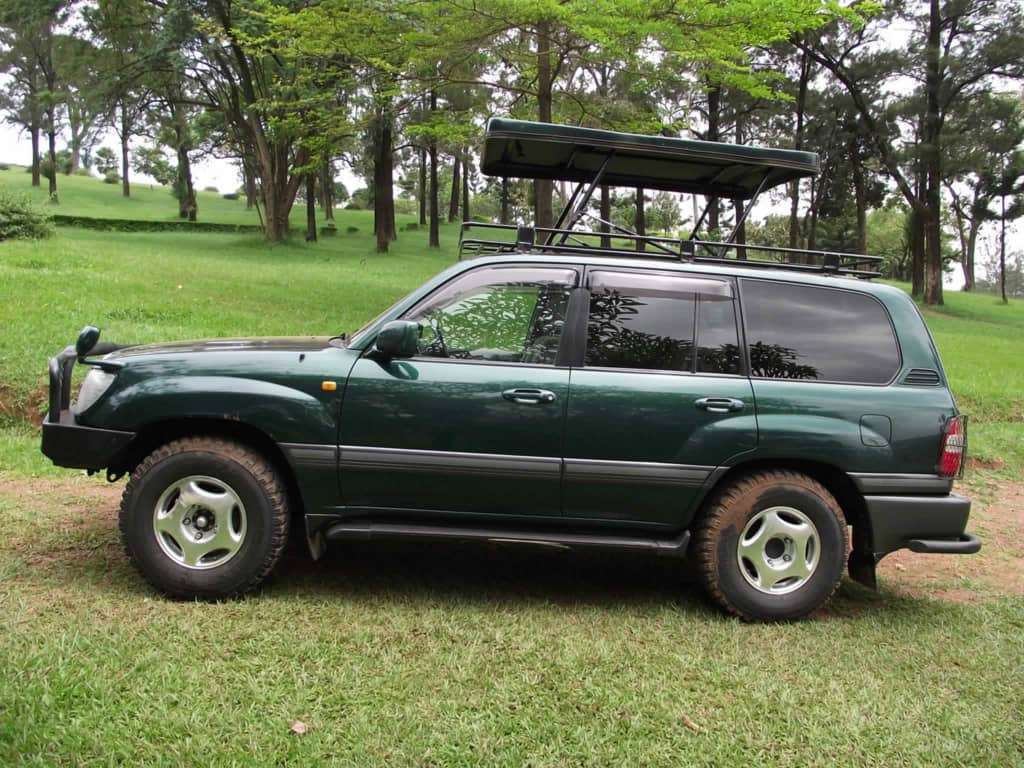
Landcruiser V8 | $100 Per Day
Ideal for 5 travellers. Economical rental rates. Comfortable vehicle with good on and off road performance. Good ride height for game viewing. Excellent fuel consumption & reliability.
MORE DETAILS
Landcruiser Prado Tx At $75 Per Day
The most preferred type among the land cruisers due to its affordability and economic nature in terms of fuel as compared to its close variant, the Land cruiser V8. Comes with a pop up roof, 4 passengers and ample trunk space.
MORE DETAILS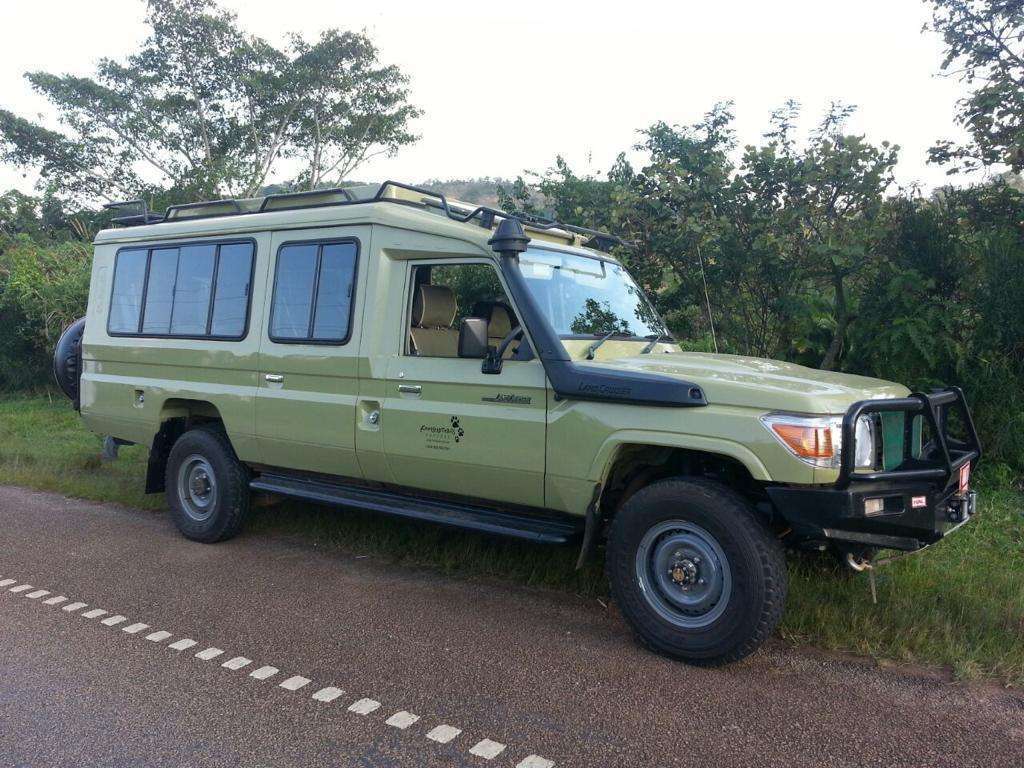
Safari Landcruiser 5/ 7 seater From $160
Ideal for 5 travellers. Economical rental rates. Comfortable vehicle with good on and off road performance. Good ride height for game viewing. Excellent fuel consumption & reliability.
MORE DETAILS
Landcruiser Lx | $130 Per Day
Also known as the landcruiser hardtop is often regarded as one of the best vehicles for safari driving due to its robust build, off-road capability, and reliability.
MORE DETAILS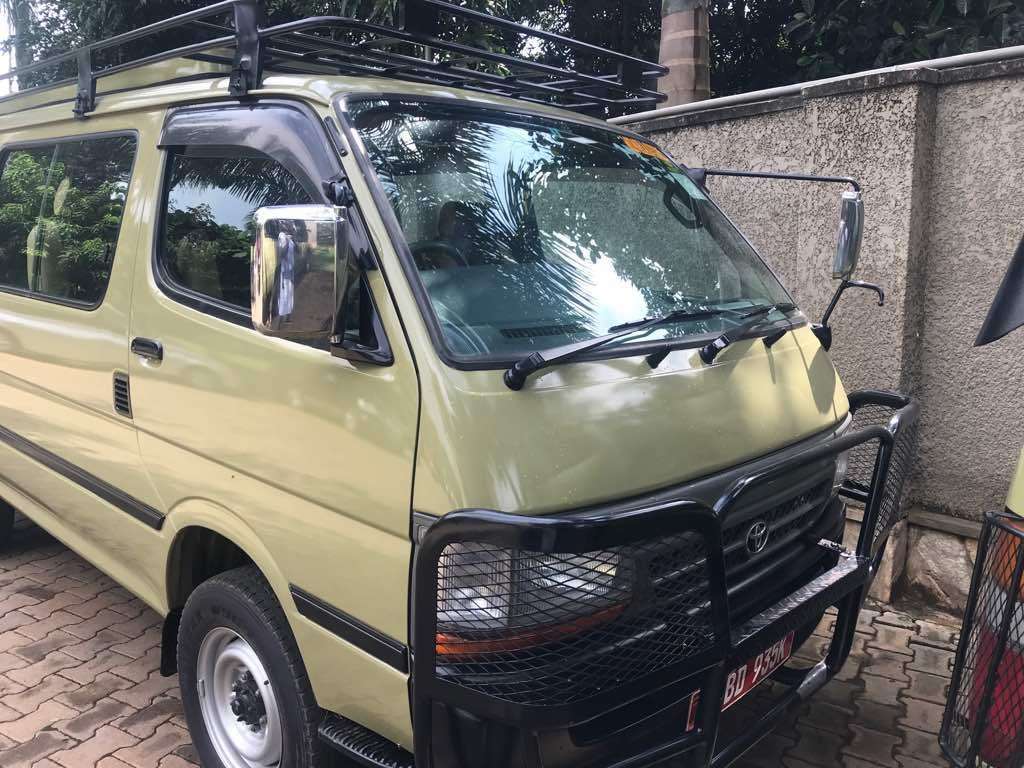
Safari Van | $100 Per Day
6 or 8 seater Best for Group Tours. Comfortable vehicle with good on and off road performance. . Excellent fuel consumption & reliability.
MORE DETAILSTop destinations in Rwanda
Volcanoes National Park

Volcanoes National Park is one of Rwanda’s most famous destinations, located in the northwest of the country along the borders with Uganda and the Democratic Republic of Congo. The park forms part of the larger Virunga Massif, a chain of volcanic mountains shared by the three countries. Its misty forests and dramatic volcanic peaks provide a spectacular setting for wildlife and adventure.
The park was established in 1925, making it one of Africa’s oldest national parks. It was initially created to protect the mountain gorillas and the forests of the Virunga region. The area later became closely associated with the work of Dian Fossey, the American primatologist who established the Karisoke Research Center in 1967 and dedicated much of her life to studying and protecting mountain gorillas.
Today, Volcanoes National Park is best known for mountain gorilla trekking. Visitors hike through the dense forest with trained guides and trackers to find habituated gorilla families. Spending time observing these endangered primates in their natural habitat is one of Rwanda’s most memorable tourism experiences. Gorilla permits are limited, so travellers should book well in advance.
The park also offers golden monkey trekking, which provides an opportunity to see the endangered golden monkey, an endemic species of the Virunga region. Other activities include hiking the volcanic mountains, bird watching, nature walks and visiting sites associated with Dian Fossey.
For travellers interested in culture, community experiences around the park provide opportunities to learn about local traditions, music, dance, food and everyday life. The Iby’Iwacu Cultural Village, for example, offers cultural experiences designed to connect tourism with surrounding communities.
Volcanoes National Park can be visited throughout the year, although the drier months generally provide more favourable hiking conditions. Because the terrain is mountainous and often wet, visitors should carry waterproof clothing and sturdy hiking shoes.
The park is easily accessible from Kigali, with the journey to Musanze taking approximately two to three hours by road. Its proximity to Uganda’s Mgahinga Gorilla National Park and Bwindi Impenetrable National Park also makes it possible to include Rwanda and Uganda in a wider gorilla trekking itinerary.
Akagera National Park

Established in 1934, Akagera was named after the Akagera River, which flows along Rwanda’s eastern border. The park suffered significant wildlife losses during the late twentieth century due to poaching, habitat pressure and the impact of conflict and displacement. Since the establishment of a long-term partnership between the Rwanda Development Board and African Parks, conservation efforts have helped restore the park’s wildlife and ecosystems.
Akagera is now home to the Big Five: lions, leopards, elephants, buffaloes and rhinos. The park also supports giraffes, zebras, hippos, crocodiles, impalas and numerous antelope species. Its wetlands and lakes make it particularly important for bird conservation, with more than 500 bird species recorded.
Game drives are the main activity, offering opportunities to explore the savannah and search for wildlife. Visitors can also enjoy a boat safari on Lake Ihema, where hippos, crocodiles, elephants and water birds can often be seen. Bird watching, guided nature walks and sport fishing are additional activities available in the park.
Akagera also provides opportunities to engage with surrounding communities. Cultural experiences can introduce visitors to traditional Rwandan food, music, dance, crafts and rural lifestyles. Community tourism initiatives help connect conservation with local livelihoods.
The park can be visited throughout the year, although wildlife viewing conditions vary with the seasons. The dry months generally make animals easier to spot, while the rainy periods transform the landscape into lush green scenery and can provide excellent birding.
Akagera is approximately 110 kilometres from Kigali, making it one of Rwanda’s most accessible national parks. Its relatively short distance from the capital makes it possible to combine a safari with a Kigali city tour and, for longer trips, a gorilla trekking experience in Volcanoes National Park.
For travellers seeking a classic African safari in Rwanda, Akagera National Park offers an impressive combination of wildlife, landscapes, wetlands and cultural experiences.
Kigali

Kigali is the capital and largest city of Rwanda, known for its cleanliness, organised streets, rolling hills and vibrant urban culture. Located in the centre of the country, Kigali is the main gateway for travellers exploring Rwanda and is often the first stop before heading to destinations such as Volcanoes National Park and Akagera National Park.
The city was established in 1907 during the German colonial period when Richard Kandt, a German explorer and colonial administrator, established a station in the area. Kigali grew gradually and became Rwanda’s capital in 1962, following independence. Today, it is the country’s political, economic and cultural centre.
One of Kigali’s most important attractions is the Kigali Genocide Memorial, which commemorates victims of the 1994 Genocide against the Tutsi. The memorial provides important historical context and helps visitors understand Rwanda’s journey through tragedy, reconciliation and reconstruction. Visitors should approach the site respectfully because of its deeply emotional significance.
Kigali also offers several opportunities to experience Rwandan culture. The Kimironko Market is a popular place to explore local produce, clothing, crafts and everyday life. Visitors can also discover traditional Rwandan cuisine, including dishes such as brochettes, grilled meats, plantains and local vegetables. Art galleries, craft centres and cultural spaces provide opportunities to explore Rwanda’s contemporary creative scene.
The city’s hills offer attractive viewpoints, while neighbourhoods such as Nyamirambo provide opportunities to experience local food, community life and urban culture. Visitors can also explore the Inema Arts Center and other creative spaces.
Kigali is generally used as a starting point for wider journeys across Rwanda. From the city, travellers can reach Volcanoes National Park for gorilla and golden monkey trekking, Akagera National Park for savannah safaris and Lake Kivu for lakeside experiences.
The city can be visited throughout the year, although weather conditions vary between the dry and rainy seasons. Travellers should also respect local regulations and customs, including Rwanda’s strict environmental policies.
With its combination of history, culture, modern development and easy access to Rwanda’s major attractions, Kigali provides an important introduction to the country and an excellent base for exploring Rwanda.
Nyungwe Forest National Park

Nyungwe was established as a national park in 2004, building on decades of conservation efforts in the forest. In 2023, Nyungwe National Park was inscribed as a UNESCO World Heritage Site because of its exceptional biodiversity and importance to conservation.
The forest is particularly famous for its primates, with around 13 species recorded. These include chimpanzees, colobus monkeys, L’Hoest’s monkeys, red-tailed monkeys and blue monkeys. Chimpanzee trekking is one of the park’s most popular experiences, allowing visitors to follow habituated chimpanzee communities through the forest. Nyungwe is also home to hundreds of bird species, including several Albertine Rift endemics.
One of the park’s most spectacular attractions is the Canopy Walkway, suspended approximately 60 metres above the forest floor. The walkway provides panoramic views across the treetops and surrounding mountains and offers excellent opportunities for photography and wildlife observation.
Other activities include guided forest walks, bird watching, primate tracking, nature hikes and waterfall visits. Cultural experiences around the forest allow visitors to interact with local communities and learn about traditional lifestyles, crafts and food.
Nyungwe can be visited throughout the year, although the forest receives considerable rainfall. Visitors should therefore carry waterproof clothing and sturdy hiking shoes. The terrain can be steep and slippery, particularly after rain.
The park is located several hours from Kigali, making it better suited to travellers with sufficient time for a longer Rwanda itinerary. It can be combined with Lake Kivu, Kigali and other destinations in Rwanda, while travellers continuing into Uganda can connect with destinations such as Bwindi and Queen Elizabeth National Park.
For travellers interested in primates, rainforest biodiversity, hiking and spectacular scenery, Nyungwe Forest National Park offers one of Rwanda’s most rewarding nature experiences.
Send Us a Message Today
How to Book Your Car Rental?
Booking a vehicle through Go Further 4×4 Car Rentals is simple and flexible. Travelers can easily make online reservations through our website, where they can compare vehicle options, choose pick-up and drop-off locations, and customize their rental period. Online booking provides convenience and helps travelers plan ahead, especially during high tourist seasons. Alternatively, customers can visit our physical office in Uganda or connect with our Rwanda-based partners. We are also available for direct inquiries to assist with specific travel requirements or custom packages.
Why Rent a Car in Rwanda?
There are many reasons to rent a car when visiting Rwanda, but chief among them is the freedom to enjoy scenic road trips and safaris. Rwanda is a dream destination for nature lovers and adventure seekers. Car rental, especially for self-drive safaris, is a popular choice among tourists who wish to explore the country’s pristine national parks and rich cultural sites. Volcanoes National Park, Nyungwe Forest National Park, and Akagera National Park are top safari locations, each home to diverse wildlife and extraordinary experiences such as gorilla trekking. Renting a car allows travelers to visit these locations comfortably while enjoying the unique beauty and rich history that Rwanda offers.
Cross Border Services with Uganda and East Africa
Travelers wishing to combine their Rwandan safari with visits to neighboring countries like Uganda or Kenya will find cross-border car rentals to be a convenient option. At Go Further 4×4 Car Rentals, we support cross-border travel and provide all necessary documentation. To cross into Uganda, travelers need a valid passport, a visa if required, and a Yellow Fever vaccination certificate. Additionally, a COMESA insurance fee of about $40 applies. We also offer flexible drop-off options in Uganda, including Entebbe International Airport, for an additional fee.
Driving in Rwanda for First time travellers
Rwanda drives on the right
The first rule to remember is simple: Vehicles drive on the right-hand side of the road in Rwanda. This is one of the most important differences between Rwanda and neighbouring Uganda, Kenya and Tanzania. If you have previously driven in those countries, do not automatically carry their left-hand traffic habits into Rwanda.
The driver normally sits on the left side of the vehicle, while traffic keeps right. When turning, joining a road, overtaking, or entering a roundabout, consciously remind yourself to remain on the correct side.
This becomes particularly important when leaving Kigali and entering quieter rural roads. Less traffic can create a false sense of security, causing an unfamiliar driver to drift towards the wrong side.
Take extra care during your first few kilometres.
Overtaking is on the left
Because Rwanda uses right-hand traffic, vehicles generally overtake on the left. Do not follow the overtaking habits you may have learned in Uganda or Kenya. Before overtaking, check the road markings, signs, oncoming traffic, motorcycles and the distance available ahead. Avoid overtaking around blind bends, hilltops, junctions, pedestrian crossings, or any location where you cannot clearly see the road ahead.
Rwanda’s hilly terrain makes this particularly important. A road can appear open immediately ahead while an approaching vehicle remains hidden behind a slope or bend.
Take Rwanda’s speed limits seriously
Speed limits in Rwanda vary depending on the road and surrounding environment. Drivers should therefore follow the posted speed limit rather than relying on one assumed national figure. Urban roads, residential areas, highways, and roads passing through built-up centres may have different restrictions. In addition, authorities can introduce lower limits in locations where pedestrian activity, road design, schools, construction or other safety concerns require additional caution.
The Rwanda National Police regularly conducts traffic enforcement, including speed monitoring. Rwanda has also invested heavily in automated traffic enforcement and cameras.
Consequently, do not assume that you can exceed the limit simply because you do not see a police officer.
Drivers should expect speed cameras
Rwanda’s use of technology for traffic management is particularly relevant to rental-car customers. Speed cameras and other automated systems can detect traffic violations. Kigali and other parts of the country have increasingly used technology to monitor road safety and traffic offences, rather than simply relying on traffic police officers.
This creates an important difference for travellers accustomed to countries where enforcement relies more heavily on roadside police checks.
With a rental car, a traffic offence may become the responsibility of the driver under the rental agreement, and the rental company may have procedures for handling fines or identifying the person who rented the vehicle. Therefore, the safest strategy is not to look for where cameras are located. Simply obey the posted limit throughout your journey.
Seat belts are mandatory
Drivers and passengers should wear seat belts whenever the vehicle is in motion. Do not assume that passengers sitting in the rear seats can travel without restraints. Before starting your journey, check that the vehicle has functioning seat belts for all occupants.
If you are travelling with children, speak to your rental company about the availability and requirements for appropriate child restraints. A quick inspection before leaving the rental office can prevent problems later.
Motorcycle taxis require particular attention
Motorcycles play an important role in Rwanda’s transport system. Kigali, in particular, has many motorcycle taxis, commonly known as motos.
Travellers who have never driven in Rwanda may initially find the number of motorcycles surprising. They can travel alongside cars, approach intersections quickly and occupy spaces around your vehicle that you might not expect.
Check your mirrors frequently and look carefully over your shoulder before changing lanes. When turning, especially at junctions, check for motorcycles approaching from either side.
Do not assume that a motorcycle is far enough away simply because it appears small in your mirror. Motorcycles can close distances quickly.
Do not copy local driving habits
Rwanda is generally known for comparatively orderly road behaviour, but you will still encounter different driving styles.
As a foreign visitor, follow the formal road rules rather than copying another driver’s behaviour. If another vehicle changes lanes without signalling or exceeds the speed limit, that does not give you permission to do the same.
Your rental agreement may also make you financially responsible for traffic offences committed during your rental period. Drive defensively and allow other road users enough space to make mistakes.
Be careful at roundabouts
Roundabouts can be confusing for drivers coming from left-hand-traffic countries. Because Rwanda drives on the right, traffic circulates differently from what you may be accustomed to in Uganda or Kenya. Choose your lane before entering and follow the road signs and markings. Give way according to the applicable traffic signs and road rules rather than assuming that your previous East African driving experience applies.
If you are uncertain, slow down and observe the movement of traffic before entering.
Kigali requires calm and predictable driving
Driving in Kigali can be considerably easier than driving in some larger African capitals because of the city’s relatively organized road network and strong enforcement.
However, Kigali has hills, busy junctions, motorcycles, pedestrians and periods of congestion. Do not rush when navigating unfamiliar streets. Instead, use navigation before setting off and confirm your route whenever possible.
Some roads may also have one-way arrangements or restrictions that change how you reach a particular destination. Following road signs is therefore more reliable than simply copying the vehicle ahead.
Pedestrians are common on Rwanda’s roads
Rwanda’s landscape means that many people travel between communities on foot. Even major roads can pass through villages, trading centres and densely populated areas. Slow down when approaching settlements and be prepared for pedestrians to cross the road.
Pay particular attention near schools, markets, bus stops and busy junctions. On rural roads, pedestrians may walk along the edge of the carriageway because dedicated sidewalks are not available. Leave enough space when passing them and reduce your speed where necessary.
Rwanda’s hills change the way you drive
Rwanda is famously known as the Land of a Thousand Hills, and its terrain has a direct impact on driving.
Many roads contain steep climbs, descents, sharp bends and narrow sections. You should therefore control your speed before entering a downhill section rather than waiting until the vehicle begins to accelerate. Use appropriate gears when descending steep roads and avoid riding the brakes continuously.
Likewise, give uphill traffic sufficient space and avoid attempting risky overtaking manoeuvres near blind bends or steep gradients. A journey that looks short on a map can take considerably longer because of Rwanda’s terrain.
Be careful during rain
Rwanda receives rainfall throughout different periods of the year, and wet roads can change driving conditions quickly. Heavy rain can reduce visibility and increase braking distances. Water can also collect on roads and make unpaved sections slippery.
If visibility becomes poor, reduce your speed and increase your following distance. Avoid sudden braking or sharp steering movements. When travelling to rural areas or national parks, ask your rental company about current road conditions before leaving.
Understand the rules Inside Akagera National Park
If your Rwanda self-drive itinerary includes Akagera National Park, remember that driving inside the park differs from driving on public roads. Akagera National Park is managed by African Parks in partnership with the Rwanda Development Board, and visitors must follow the park’s regulations.
Stay on designated tracks, follow park instructions and respect wildlife. Animals can appear on or beside tracks without warning. Elephants, buffaloes, hippos and other wildlife can pose serious risks when approached too closely.
Do not drive aggressively towards animals or attempt to force them to move for photographs. Most importantly, remain inside the vehicle except in designated areas where leaving it is permitted.
Take extra caution when driving in Volcanoes National Park
Travellers visiting Rwanda for gorilla trekking often rent vehicles to reach Volcanoes National Park. However, having a 4×4 does not mean you can drive anywhere around the park. Rwanda’s protected areas operate under specific conservation rules. Your rental vehicle should remain on permitted roads, while trekking activities take place under the guidance of park authorities and trackers.
Ask your rental company about the road conditions around your accommodation and trekking meeting point before beginning the journey.
Nyungwe NP requires extra attention to distance and terrain
Travelling to Nyungwe National Park involves long stretches of scenic but winding roads. The terrain and bends require patience. Do not judge your journey solely by kilometres because average speeds can be much lower on mountainous roads.
Wildlife and pedestrians may also appear along sections of the route. Start your journey early enough to reach your accommodation comfortably and avoid turning a beautiful road trip into a rushed nighttime drive.
Parking in Kigali is regulated
Do not assume that you can park anywhere in Kigali simply because you find an empty space. The city has designated parking areas and regulated parking arrangements. Follow signs and local instructions when leaving your rental car. Ask your hotel or accommodation where guests should park rather than leaving the vehicle on an unrestricted-looking roadside.
Also avoid leaving passports, cameras, luggage or other valuable items visible inside the vehicle.
Rwanda–Uganda border crossings require preparation
The Rwanda-Uganda border is particularly relevant to East African travellers planning a regional road trip. However, you should not rent a vehicle in Kigali and assume that you can cross into Uganda without notifying the rental company.
Cross-border rental arrangements may require authorization from the vehicle owner, insurance documentation, temporary importation arrangements and other paperwork.
Some rental companies may also restrict particular vehicles from crossing borders. Arrange the necessary documentation before departure rather than attempting to solve the problem at the border.
What makes driving in Rwanda different from Uganda and Kenya?
The most obvious difference is the side of the road. Uganda and Kenya drive on the left, while Rwanda drives on the right.
The difference continues beyond road positioning. Rwanda has a particularly strong emphasis on traffic discipline and technology-based enforcement. Speed cameras, structured parking systems, motorcycle traffic, hilly terrain and Kigali’s organized urban road network create a driving environment that can feel different from Kampala or Nairobi.
For a traveller who has already driven in Uganda, crossing into Rwanda requires a conscious change of driving habits.
Do not simply assume that because the countries share a border, their traffic systems work in exactly the same way.