

GoFurther 4×4 Car Rentals is thrilled to announce that we have extended our services to Tanzania! We pride ourselves on experience of over seven years of providing unmatched car hire services in East Africa; particularly Uganda, Kenya and neighbouring Rwanda.
Our extensive selection of high quality vehicles are tailored to meet your travel needs. All our vehicles are meticulously well maintained, full time 4×4, reliable, well insured, and in excellent mechanical condition. Our vehicle fleet ranges from compact cars that are perfect for weaving through the city streets to spacious safari cars designed for family safari adventures.
Enjoy the freedom of exploring Tanzania at your own pace by self driving, or you can improve on your travel experience by opting to have a driver who will act as your travel guide and companion. You may rent our cars on a short term basis but be assured of good deals if you rent long term with us. If you’re interested in exploring the neighboring countries, GoFurther 4×4 Car Rentals offers one way deals depending on your travel schedule. We also provide additional services like airport pick ups and drop offs, camping gear, GPS navigation systems, and everything you might require during your journey to ensure a worry-free adventure.

Safaris Cars to Hire in Tanzania
Tanzania, commonly known at the Land of Kilimanjaro is renowned for its breath-taking landscapes, rich cultural heritage, and diverse wildlife. Its beauty and diversity make it a captivating destination for travellers seeking adventure. Visit the tallest mountain in Africa; Mt Kilimanjaro which has an elevation of about 5,895 metres above sea level and is the leading trekking destination on the African continent.
The gems in Tanzania are endless and there is no better way to explore this beautiful country than renting a car for self drive or chauffer driven! Renting a car gives you the freedom to embark on your adventure at your own pace and it is a very convenient way of getting around.
Your choice of vehicle largely depends on your travel needs for example your travel group size, budget, and personal preferences. Be reminded that Tanzania is a very large country with a surface area of 947,300 square kilometres; and is more than twice the size of the USA state of California. This means that you have to be prepared to drive/travel very long distances to get to your destinations. Therefore, you need a strong and reliable vehicle that can go long mileages while being able to withstand the unstable roads and terrains in safari destinations.
At GoFurther 4×4 Car Rentals Tanzania, we offer a diverse fleet of vehicles for you to choose from and here are some of the top recommendations for your safari adventure.
The Toyota Land cruiser Hardtop
The Toyota Land Cruiser Hardtop has a history that dates back to several decades and has seen various alterations over the years. It is often regarded as one of the best vehicles for safari driving due to its robust build, off-road capability, and reliability. It requires less maintenance and is dependable in remote areas where access to repair services may be limited.
It has a V8 engine which provides strength and reliability affecting a good torque for off-road driving. It is very stable on the road due to the robust suspension system. Its interior has durable materials that can withstand wear and tear from outdoor activities. It is also spacious and designed for comfort, accommodating multiple passengers along with their luggage. There may also be options for comfort features such as air conditioning, power windows, and modern sound systems.
One of the standout features of the Hardtop variant is its high cargo capacity, making it suitable for carrying gear for outdoor activities, such as camping, safari equipment, or supplies for remote visits.
The Hardtop features a full-time 4wheel-drive system enabling it to have traction on rugged terrains, mud, and uneven surfaces. Its high ground clearance is essential for navigating rocky paths, and uneven ground commonly found in safari environments.
The large fuel tank allows for extended drives without the need for frequent refuelling. The Land Cruiser Hardtop has a pop up roof and high sitting positions for better wildlife spotting.
SUMMARY:
- 4 passengers
- Manual transmission
- Hard body
- Diesel Engine
- Airconditioning
- Low fuel consumption
- 9/10 score on reliability
PRICE RANGE: $130 – $180 ACCORDINGLY TO EXTRAS


The Landcruiser Prado
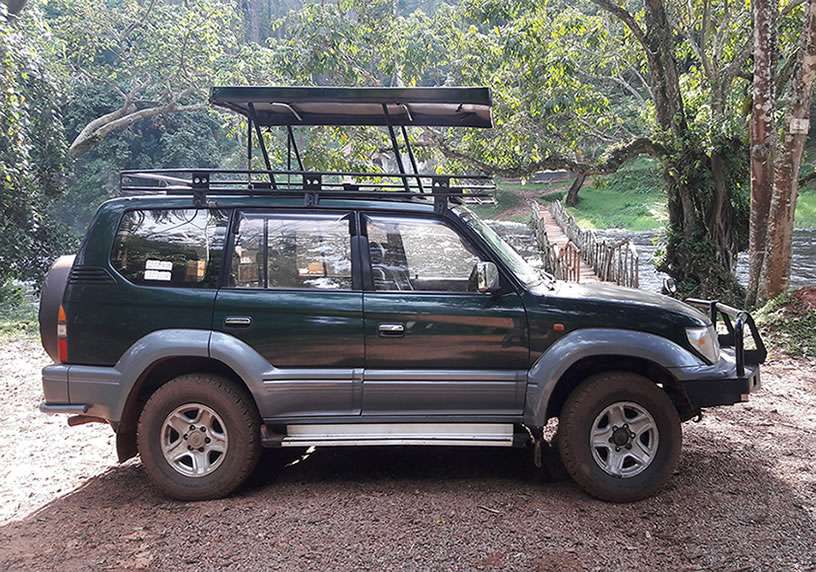
The Land Cruiser Prado is one of the most commonly used vehicles for safari tours in Tanzania. It excels in off-road performance with its full time 4×4 system while offering the comfort and technology expected in modern vehicles. Of all the Prado variations like the Prado TX, Prado V8, Prado GX and VX, the V8 provides a luxurious feel and has the capability to navigate even the roughest and slipperiest of terrains.
The Prado’s are personalised with pop up roofs for easy wildlife viewing and if you’re looking to enjoy the greater outdoors, the Prado may be fitted with a rooftop tent for a great camping experience. The Prado typically features the turbocharged diesel and petrol engines which provide a good balance of power and efficiency, with ample torque for off-road driving.
The interior of the Prado includes comfortable seating for up to seven passengers, air conditioning, an advanced navigation system and sound system with Bluetooth connectivity.
The Prado also offers flexible cargo space, with an adjustable third-row seating configuration that can fold flat to accommodate larger items.
However, it is important to note that the Prado may have mileage limitations so you can rent it if you do not plan on driving very long distances.
SUMMARY:
- 4 passengers
- Automatic transmission
- Extra 4 wheel drive
- Diesel Engine
- Air-conditioning
- Fair fuel consumption
- 5/10 score on reliability in Tanzania parks
PRICE RANGE: $90 – $150
Varies with;
- Rental extras like rooftop tents
- Length of the rental
- Physical mileage etc

The Land Rover
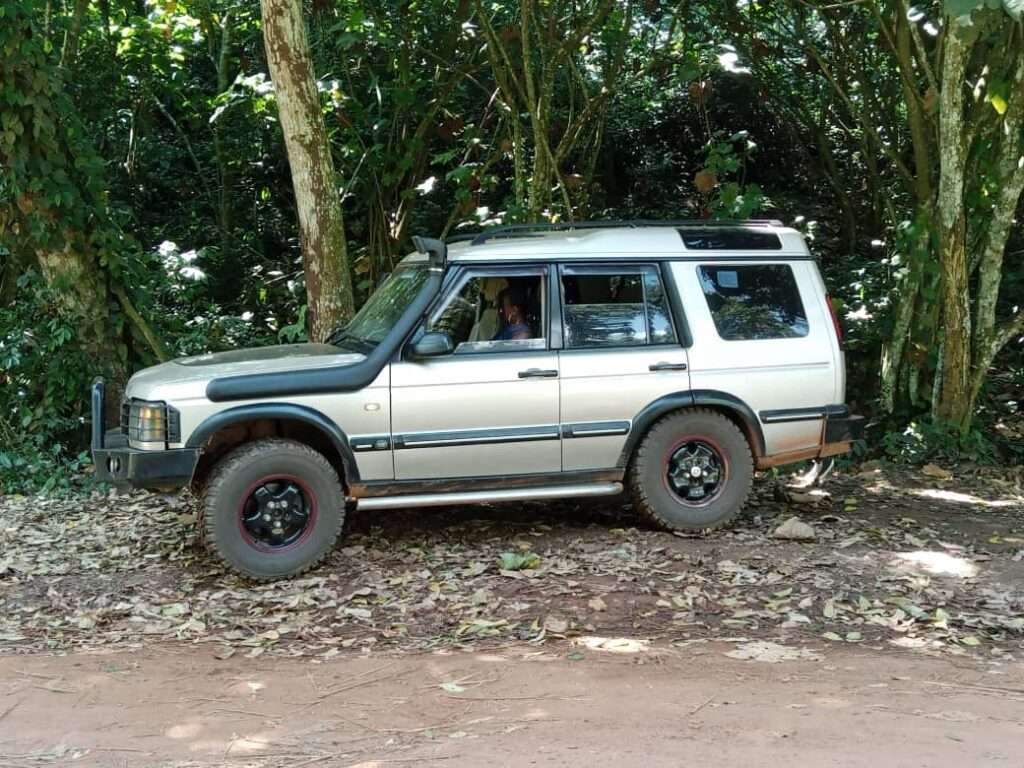
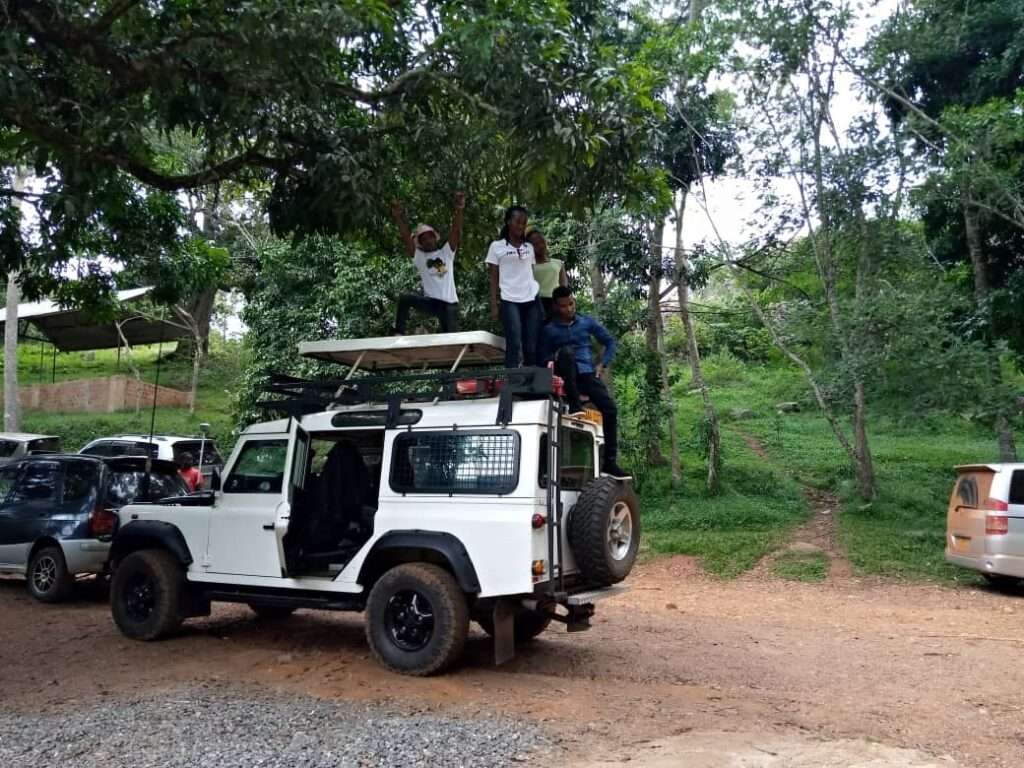
Land Rover vehicles, particularly the Defender and Discovery models, are well-known for their suitability for safari trips. They are rare to find but are available at GoFurther 4×4 Car Rentals. Land Rovers come equipped with advanced four-wheel-drive systems that allow for optimal traction on a variety of surfaces, including mud , and rocky terrains. The elevated ground clearance helps the vehicle navigate through challenging landscapes, preventing damage during off-road excursions.
The Land Rover is one of the most reliable safari vehicles designed to endure the stresses of difficult terrains found in safari regions where breakdown assistance may be limited. It has a spacious interior and can sit up to 5 passengers and has ample legroom.
For better viewing of the wildlife, the Land rover has a pop up roof and higher sitting positions. Many Land Rovers offer quiet and smooth rides which can help minimize disturbances to wildlife increasing the likelihood of close encounters with animals. The combination of advanced off-road capabilities, durability, spacious interiors, and comfort makes Land Rover vehicles particularly suited for safari trips.
SUMMARY:
- 4 passengers
- Automatic transmission
- Extra 4 wheel drive
- Diesel Engine
- Air-conditioning
- Fair fuel consumption
- 5/10 score on reliability in Tanzania parks
PRICE RANGE: $90 – $150
Varies with;
- Rental extras like rooftop tents
- Length of the rental
- Physical mileage etc
Safari Vans
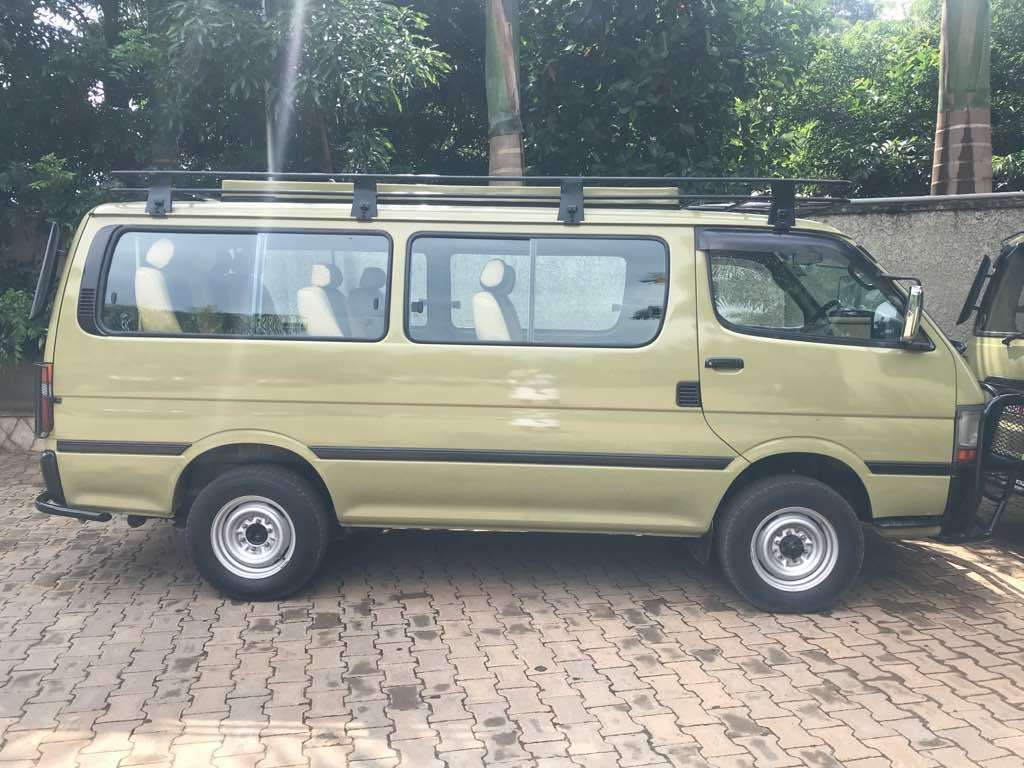
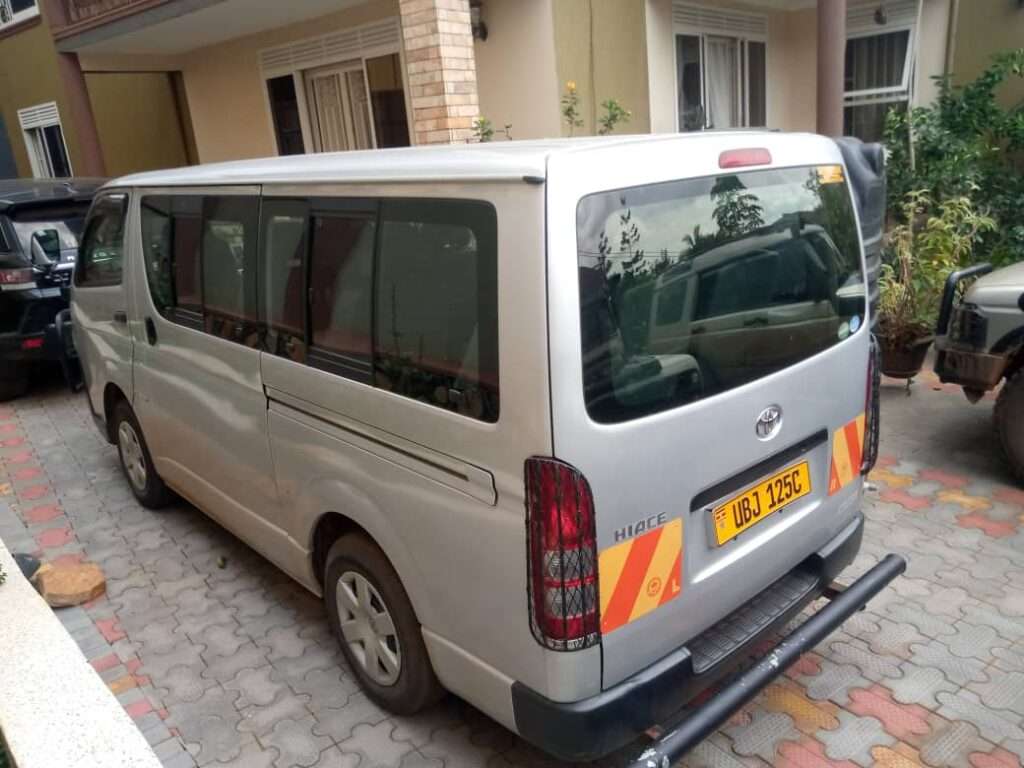
Safari vans are specifically designed to cater for the needs of group tours. They usually have a higher seating capacity, accommodating groups of travellers of up to 11 people and often feature comfortable seating arrangements and ample legroom allowing passengers to enjoy the ride without feeling cramped.
They also pop-up roofs, providing excellent visibility for wildlife viewing.
All our safari vans are equipped with a 4WD system, allowing them to navigate various terrains, including rough roads, and muddy tracks often encountered during safari journeys. They also have air conditioning and upon your request, a fridge may be installed for your trip to keep your drinks cool. Note that safari vans are typically operated by experienced drivers who may act as your travel guides and give you information about all the places you visit. Safari vans’ off-road capabilities allow them to access remote parts of national parks and reserves, providing access to areas where wildlife is plentiful and less disturbed by human activity.
SUMMARY:
- 9 passengers
- Best with a driver
- 4 wheel drive
- Diesel Engine
- Air-conditioning
- Great fuel consumption
- 6/10 score on reliability in Tanzania parks
PRICE RANGE: $120 – $160
Varies with;
- Rental extras like chauffeur services
- Length of the rental
- Physical mileage etc
The Land Cruiser V8, GX and VX
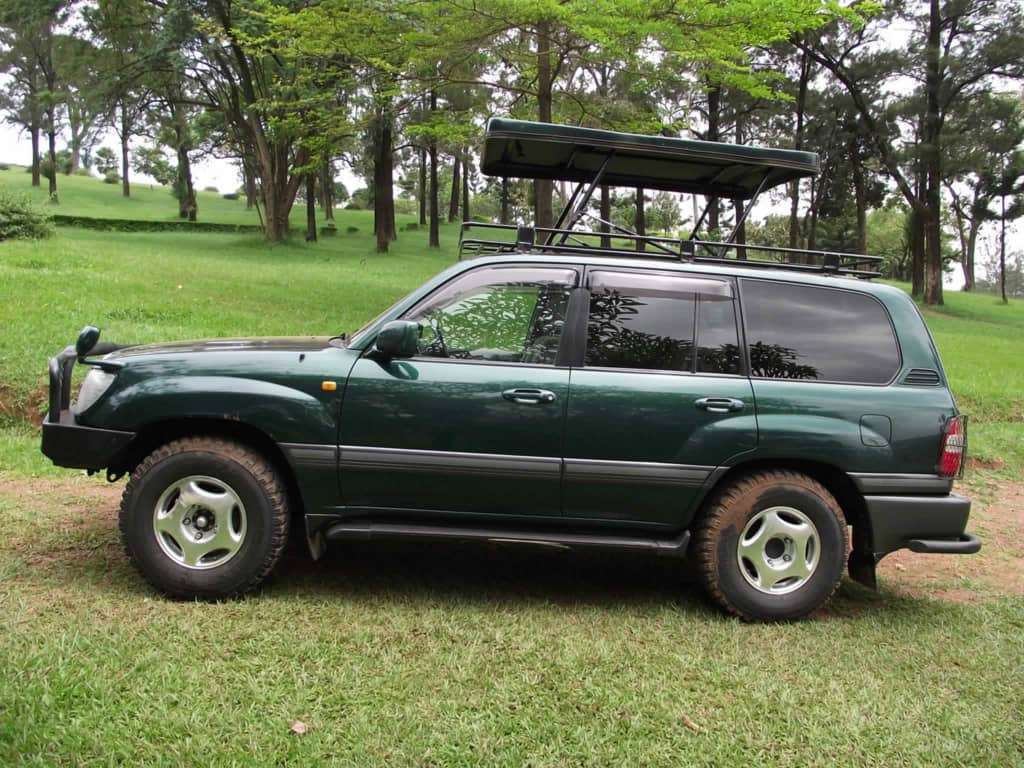
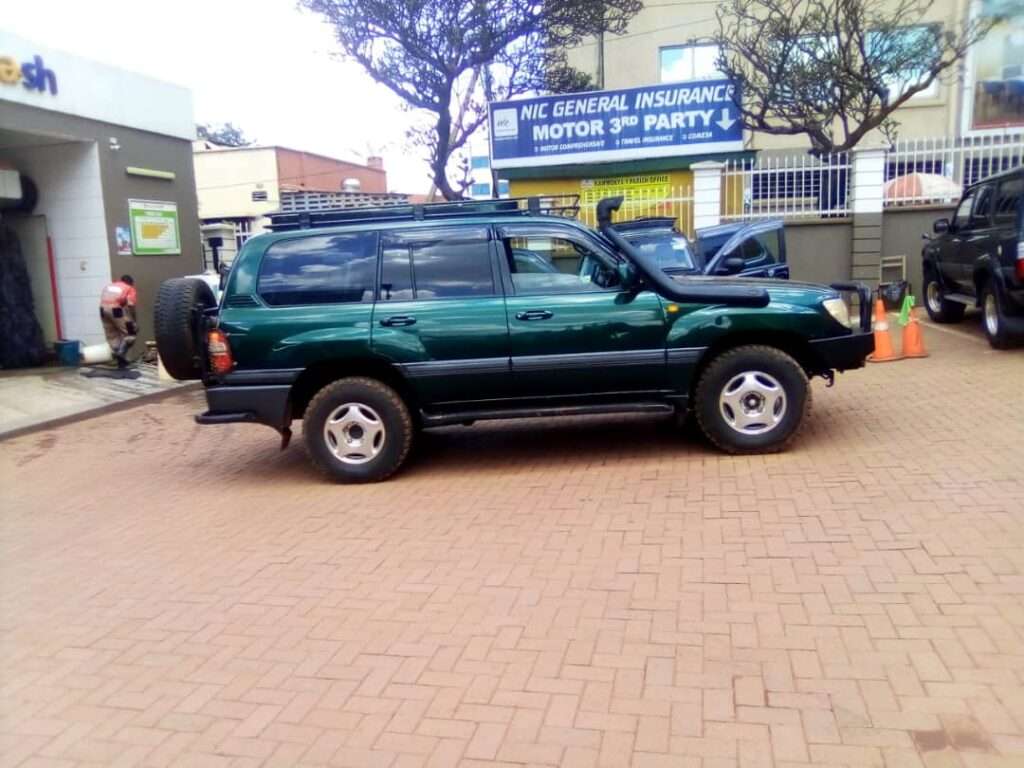
If you’re a traveller looking for luxury and top notch comfort; the Landcruiser V8, GX and VX are your besties. These SUVs are known for their exceptional off-road capabilities, reliability, and luxury features, making them the ideal choices for safari adventures.
All three of these vehicles are powered by the V8 engine which provides ample power for tough terrains, ensuring a smooth driving experience over rugged landscapes.
They are also equipped with advanced four-wheel-drive systems, so they can handle various off-road conditions, from muddy trails to rocky paths.
The GX and VX models offer ample space for passengers and gear, making them comfortable for larger groups and they also provide excellent visibility for wildlife viewing.
The VX in particular comes with premium features such as leather seating, advanced sound systems, and multiple climate control zones(AC), enhancing comfort during long journeys
All these Land Cruiser models are equipped with a range of safety technologies, including multiple airbags, stability control, and advanced braking systems.
SUMMARY:
- V8 and VX are automatic
- GX is manual transmission
- 4 wheel drive
- Diesel (GX) Engine
- Air-conditioning
- High fuel consumption for V8
- 7/10 score on reliability in Tanzania on selfdrive
PRICE RANGE: $120 – $160
Varies with;
- Rental extras like rooftop tent
- Length of the rental
Top Locations in Tanzania
Serengeti National Park

Wildebeest crossing the vast plains of Serengeti National Park during the Great Migration, Tanzania.
Serengeti National Park is Tanzania’s most famous safari destination and one of Africa’s greatest wildlife areas. The name Serengeti comes from the Maasai word “siringit,” meaning endless plains, an appropriate description of the park’s vast grasslands.
The park was established in 1951 and forms part of the wider Serengeti-Mara ecosystem, which extends into Kenya’s Maasai Mara. Its most famous attraction is the Great Wildebeest Migration, when millions of wildebeest, accompanied by large numbers of zebras and gazelles, move between Tanzania and Kenya in search of fresh grazing and water.
The Serengeti supports the Big Five, including lions, leopards, elephants, buffaloes and rhinoceroses. Cheetahs, hyenas, giraffes, hippos, crocodiles and numerous antelope species are also found throughout the ecosystem.
Game drives are the main activity, while selected areas offer walking safaris and hot-air balloon experiences. Visitors can also learn about Maasai culture in communities surrounding the park.
The best time to visit depends on the experience you want. Wildlife viewing remains possible throughout the year, while the migration follows seasonal rainfall and grazing patterns rather than a fixed calendar.
Ngorongoro Conservation Area

African wildlife grazing inside the spectacular Ngorongoro Crater in northern Tanzania.
Ngorongoro Conservation Area is one of Tanzania’s most remarkable landscapes. It is centred around the Ngorongoro Crater, a vast volcanic caldera formed when a large volcano collapsed millions of years ago.
The area was established in 1959 and differs from a conventional national park because it allows wildlife conservation alongside the traditional activities of indigenous communities, particularly Maasai pastoralists.
The crater contains an extraordinary concentration of wildlife. Lions, elephants, buffaloes, zebras, wildebeest, hippos and numerous antelope species can be seen on the crater floor. The area is also one of Tanzania’s important places to search for the endangered black rhinoceros.
Beyond wildlife, the conservation area has significant archaeological importance. The Olduvai Gorge, located within the wider conservation area, has produced important discoveries relating to early human evolution. Visitors can learn about these discoveries at the Olduvai Gorge Museum.
Maasai cultural experiences are another major attraction. Visitors can learn about traditional pastoralist lifestyles, homes, ceremonies, crafts and livestock keeping.
Mount Kilimanjaro

Snow-capped Mount Kilimanjaro rising above the African landscape in Tanzania.
Mount Kilimanjaro is Africa’s highest mountain and one of Tanzania’s most recognisable landmarks. Rising to approximately 5,895 metres above sea level, the mountain attracts climbers from around the world.
Kilimanjaro has several ecological zones, ranging from cultivated foothills and rainforest to alpine desert and the glacial summit area. This changing environment makes the climb as much a journey through different landscapes as a physical challenge.
The mountain has strong cultural significance for communities living around it, including the Chagga people. Visitors can combine climbing with cultural tours, coffee experiences and visits to villages around the mountain.
Several routes lead towards the summit, including Machame, Marangu, Lemosho and Rongai. Climbers should choose their route carefully because acclimatisation and preparation are important for dealing with altitude. Here is everything you need to know about hiking Mt Kilimanjaro.
For visitors who do not want to climb to the summit, the surrounding Kilimanjaro region still offers hiking, coffee tours, waterfalls and cultural experiences.
Zanzibar

Turquoise waters and white sandy beaches along the tropical coast of Zanzibar, Tanzania
Zanzibar is Tanzania’s most famous beach destination and an important part of the country’s cultural heritage. The archipelago consists of several islands, with Unguja, commonly called Zanzibar, being the largest and most visited.
The island’s history reflects centuries of trade across the Indian Ocean. African, Arab, Persian, Indian and European influences shaped its culture, architecture, cuisine and language.
Stone Town, the historic heart of Zanzibar City, is one of the island’s major attractions. Its narrow streets, carved wooden doors, old buildings and historic sites reflect the island’s Swahili and Indian Ocean heritage. Stone Town is a UNESCO World Heritage Site.
Zanzibar is also known for its beaches, particularly around Nungwi, Kendwa, Paje and Matemwe. Travellers can enjoy swimming, diving, snorkelling, sailing, fishing and sunset cruises. The island is also famous for spices. Spice tours introduce visitors to cloves, cinnamon, vanilla, cardamom and other crops that have contributed to Zanzibar’s nickname as the Spice Island.
Cultural tourism, seafood, Swahili cuisine and traditional dhow sailing add to the island’s appeal.
Tarangire National Park

Large herds of elephants beneath iconic baobab trees in Tarangire National Park.
Tarangire National Park is located in northern Tanzania and is particularly famous for its large elephant populations and ancient baobab trees. The park takes its name from the Tarangire River, an important source of water for wildlife during the dry season.
The landscape includes savannah, woodland, wetlands and seasonal rivers. During dry periods, animals from surrounding areas gather around permanent water sources, creating excellent wildlife-viewing opportunities. Elephants are among the park’s highlights, while lions, leopards, buffaloes, zebras, giraffes and several antelope species are also present. Tarangire is particularly interesting for bird enthusiasts because of its diverse birdlife.
Game drives are the primary activity, while some areas around the park support walking and cultural experiences. Tarangire is often included in northern Tanzania safari circuits alongside Lake Manyara, Ngorongoro and Serengeti.
Lake Manyara National Park

Lake Manyara National Park is the only park in Tanzania where you can get a chance to see the rare mountain climbing lions
Lake Manyara National Park is a relatively compact but diverse wildlife destination beneath the Great Rift Valley escarpment. The park surrounds much of Lake Manyara and combines groundwater forests, open woodland, grassland and wetlands.
The park became particularly famous for its tree-climbing lions, although sightings are not guaranteed. Elephants, buffaloes, giraffes, zebras, hippos and various antelope species can also be seen.
The lake attracts large numbers of birds, making the area particularly appealing to bird watchers. Depending on the season and water conditions, flamingos and other waterbirds may be visible.
Visitors can enjoy game drives, bird watching, nature walks and cultural experiences in nearby communities. The park is conveniently located along the northern safari circuit and can be combined with Tarangire and Ngorongoro.
Arusha

Mount Meru overlooking the vibrant city of Arusha, Tanzania.
Arusha is Tanzania’s safari capital and an important gateway to several northern destinations. Located near Mount Meru, the city serves as a starting point for journeys to Serengeti, Ngorongoro, Tarangire and Kilimanjaro.
Arusha has a diverse population and a strong connection to the cultures of northern Tanzania. Visitors can explore local markets, restaurants, craft centres and cultural attractions before or after a safari.
The Arusha Cultural Heritage Centre provides opportunities to explore Tanzanian art and cultural history, while nearby communities offer experiences involving traditional food, crafts and local lifestyles.
The city also provides access to Arusha National Park, where visitors can see giraffes, buffaloes, zebras, warthogs and various antelope species. Mount Meru, Tanzania’s second-highest mountain, offers another major hiking opportunity.
Arusha is particularly useful for travellers who want to build a multi-destination northern Tanzania itinerary.
Dar es Salaam

Dar es Salaam waterfront overlooking the Indian Ocean along Tanzania’s coast.
Dar es Salaam is Tanzania’s largest city and an important commercial centre on the Indian Ocean coast. Its name means “haven of peace” in Arabic, reflecting the city’s historical connection to coastal trade and Islamic culture. The city developed significantly during the nineteenth century under the Sultanate of Zanzibar and later became an important German and British colonial centre.
Visitors can explore museums, markets, beaches and historic sites. The National Museum, Village Museum and Kivukoni Fish Market provide insight into Tanzanian history and everyday life. Dar es Salaam is also a gateway to coastal islands and marine destinations. Bongoyo Island and Mbudya Island offer opportunities for swimming, snorkelling and relaxing on beaches.
The city is an important transport hub for travellers heading towards southern Tanzania, Zanzibar and the coast.
Nyerere National Park

Boat safari along the Rufiji River in Nyerere National Park, Tanzania.
Formerly known as Selous Game Reserve, Nyerere National Park is one of Tanzania’s largest protected areas and covers a vast wilderness in the country’s southeast. The park is named after Julius Nyerere, Tanzania’s first president and one of the country’s most influential historical figures.
The Rufiji River is one of the park’s defining features. Its waterways, lakes and channels support hippos, crocodiles and numerous water birds, while surrounding wilderness supports elephants, lions, buffaloes, giraffes, wild dogs and other wildlife. Nyerere offers a different safari experience from the northern circuit. Alongside traditional game drives, visitors can enjoy boat safaris and walking safaris, providing different perspectives of the landscape.
The park can be combined with nearby destinations such as Mikumi or the Indian Ocean coast.
Ruaha National Park

African elephants roaming the dry savannah of Ruaha National Park in Tanzania.
Ruaha National Park is Tanzania’s largest national park and one of the country’s most important wilderness areas. It lies in central Tanzania and is known for its remote atmosphere and large elephant population. The Great Ruaha River provides an important source of water, particularly during the dry season. Wildlife includes elephants, lions, leopards, buffaloes, giraffes, zebras and numerous antelope species.
Ruaha is also notable for its bird diversity and large numbers of predators. The park attracts fewer tourists than the Serengeti, making it appealing to travellers seeking a quieter safari experience. Game drives are the main activity, while walking safaris provide a more intimate way to experience the wilderness.
Mafia Island

A traditional dhow boat and turquoise waters surrounding Mafia Island on Tanzania’s coast.
Mafia Island is a quieter alternative to Zanzibar for travellers seeking marine experiences away from larger tourist crowds. It forms part of the Mafia Archipelago off Tanzania’s southern coast. The island is known for its coral reefs, marine life and protected waters. Mafia Island Marine Park provides opportunities for diving, snorkelling, boat trips and fishing.
Depending on the season, visitors may also have opportunities to swim with whale sharks, which are among the largest fish in the world.
Mafia’s communities maintain strong connections to fishing and coastal traditions. Visitors can experience local food, explore villages and learn about traditional island life.
Bagamoyo

Historic buildings and Swahili architecture in the coastal town of Bagamoyo, Tanzania.
Bagamoyo is one of Tanzania’s most historically significant coastal towns. Located north of Dar es Salaam, it played an important role in Indian Ocean trade and later became a major centre during the colonial period.
The town’s history includes connections to Arab and Swahili traders, European explorers, missionaries and the caravan trade from the interior. Visitors can explore historic buildings, old trading sites and religious landmarks. The Bagamoyo Museum provides additional insight into the area’s complex history.
Bagamoyo also has beaches and traditional cultural experiences, making it an interesting stop for travellers who want to combine history with coastal relaxation.
Stone Town

Historic Swahili architecture and narrow streets in Stone Town, Zanzibar.
Although Stone Town is part of Zanzibar, it deserves separate attention because of its exceptional historical and cultural importance. The old city developed as a major centre of Indian Ocean commerce, bringing together African, Arab, Persian and Indian influences. Its architecture reflects this multicultural history through carved doors, coral-stone buildings, narrow streets and historic marketplaces.
Important attractions include the Sultan’s Palace, House of Wonders, Darajani Market and the former slave market site. Walking through Stone Town is one of the best ways to experience Zanzibar’s history. Visitors can also take guided food tours, explore local markets and enjoy traditional Swahili cuisine.
Maasai Communities

Maasai people in traditional clothing participating in a cultural experience in Tanzania
Maasai are among the most recognisable cultural communities in East Africa, with communities living across northern Tanzania and southern Kenya. Cultural visits can introduce travellers to traditional homes, livestock keeping, crafts, music, dance and aspects of Maasai social life. However, responsible tourism is important. Visitors should choose community-based experiences that respect local people and ensure that tourism contributes meaningfully to communities.
Northern Tanzania’s safari destinations provide several opportunities to combine wildlife viewing with cultural experiences.
Lake Natron

Flamingos gathering along the shores of Lake Natron beneath Tanzania’s dramatic landscape
Lake Natron is a remote and striking destination in northern Tanzania, famous for its unusual landscapes, alkaline waters and importance as a breeding area for lesser flamingos. The lake sits beneath the dramatic Ol Doinyo Lengai volcano, which is considered sacred by the Maasai and is one of the world’s few active volcanoes that produces natrocarbonatite lava.
Visitors can explore the surrounding landscapes, hike to waterfalls and experience local Maasai culture. The area’s remote character makes it particularly attractive to adventurous travellers looking beyond Tanzania’s traditional safari circuit.
Why Choose GoFurther 4×4 Car Rentals Tanzania
At GoFurther 4×4 Car Rentals, our customers are our top priority and our dedicated team is always here to assist you every step of the way, providing personalized recommendations and answering any questions you may have. We also quickly respond to inquiries and ensure that you have a memorable rental experience. Countless satisfied customers have chosen us as their trusted car rental partner and have left great testimonies about our services on travel sites like TripAdvisor and Google.
We believe in fair and transparent pricing and all our rates are clearly displayed, with no hidden fees or surprises at checkout. Whether you’re a first-time renter or a seasoned traveller, you’ll appreciate our straightforward approach that allows you to plan your budget with confidence.
Our user-friendly website allows you to search for available vehicles effortlessly based on your specific requirements and with real-time booking capabilities, you can secure your car in just a few clicks, ensuring that your travel plans are as seamless as possible.
Count on us to make your travel to Tanzania memorable as you navigate this breath-taking country. Explore new destinations like Dar Es Salaam, Serengeti NP, Mt Kilimanjaro, Tarangire NP, Ngorongoro NP and many more; creating lasting memories, and enjoying the freedom that comes with having the perfect vehicle at your disposal.
Everything self-drive travelers in Tanzania should know
Renting a car for self-drive in Tanzania can give you the freedom to explore the country beyond the usual guided safari itinerary. You can drive from Arusha towards Serengeti National Park, follow the route to Ngorongoro, explore Tarangire and Lake Manyara, or take a longer road trip towards Dar es Salaam and Zanzibar. However, Tanzania’s enormous distances, busy towns, wildlife areas and varied road conditions require careful preparation.
Although Tanzania shares borders and several driving characteristics with Uganda and Kenya, travelers should not assume that the traffic rules are exactly the same. Tanzania drives on the left-hand side of the road, but its speed restrictions, traffic enforcement, road signs, vehicle requirements and national park regulations form part of its own legal and regulatory system.
The Tanzania Traffic Act, the Tanzania Police Force, the Tanzania Roads Agency (TANROADS), the Tanzania Rural and Urban Roads Agency (TARURA), and the Tanzania National Parks Authority (TANAPA) are among the institutions relevant to road users and travellers.
Before collecting a rental vehicle, take time to understand the following rules and practical considerations.
Tanzania drives on the left
Tanzania uses left-hand traffic, so you should drive on the left side of the road and normally overtake on the right.
This will feel familiar to visitors coming from Uganda, Kenya or other countries that use the same system. However, familiarity can sometimes create overconfidence. Tanzania has long highways, busy towns and extensive rural roads, so you still need to pay attention to road markings and traffic signs.
Keep to the left unless you are overtaking or road conditions require you to change position. After overtaking, return to the left when it is safe.
If you are travelling from Rwanda, remember that Rwanda drives on the right. Crossing the Rwanda-Tanzania border therefore requires a conscious change in driving habits.
Know Tanzania’s speed limits
Speed limits are among the most important rules to understand before starting a Tanzanian road trip. For many private vehicles, the maximum speed on highways is generally 100 km/h, while lower limits commonly apply in built-up areas. Tanzania also applies specific restrictions depending on the road, vehicle category and circumstances.
However, do not treat 100 km/h as a target speed. Always follow the speed displayed on roadside signs because particular sections can have lower limits.
This is especially important around towns, schools, villages, junctions and areas with heavy pedestrian activity. On safari roads, the applicable speed can be considerably lower. Park authorities may impose their own restrictions, and drivers must follow the rules of the protected area they are visiting.
Highway conditions do not permit maximum speed
A Tanzanian highway can appear straight and empty, but that does not necessarily mean you should drive at the maximum permitted speed. Long-distance routes can contain pedestrians, cyclists, motorcycles, buses, livestock, roadside markets and vehicles joining from smaller roads.
Furthermore, some roads pass through settlements where people routinely cross the highway.Therefore, treat the posted speed limit as a ceiling rather than a recommended cruising speed. Reduce your speed whenever visibility, road surface or traffic conditions require it.
Overtaking is done on the right
Because Tanzania drives on the left, overtaking normally takes place on the right. Only overtake when you have sufficient visibility and enough road space to complete the manoeuvre safely. Avoid overtaking near blind corners, hilltops, junctions, pedestrian crossings and other areas where an approaching vehicle may not be visible.
Pay close attention to centre-line markings. A solid line or other restrictive road marking can prohibit crossing into the opposing lane. Do not copy another driver’s risky overtaking manoeuvre simply because they appear to have completed it successfully.
Be careful around Daladala
In Tanzanian cities and towns, daladala are an important form of public transport. These minibuses can stop frequently to pick up and drop off passengers. When driving behind one, leave enough distance to react if it stops suddenly. Do not attempt to squeeze past when passengers are boarding or leaving.
This is particularly important in Dar es Salaam and other busy urban areas where pedestrians may move around vehicles unpredictably. A self-drive traveller should anticipate the behaviour of public transport vehicles rather than reacting at the last second.
Expect boda bodas and motorcycles
Motorcycles are common across Tanzania, particularly outside major urban centres. They can approach from behind, filter through slow-moving traffic and appear alongside your vehicle when you are turning. Before changing lanes, check your mirrors and blind spots. When turning, use your indicators early and look for motorcycles approaching on either side.
Also leave sufficient space when passing motorcycles on rural roads.
Seat belts apply to everyone
Drivers and passengers should wear seat belts while travelling. Before leaving the rental office, check that all passengers have functioning seat belts. Do not assume that rear-seat passengers can travel without restraints.
If you are travelling with children, arrange appropriate child restraints in advance. Do not wait until you collect the vehicle to discover that the rental company does not have the type of child seat you require.
Do not use a handheld phone while driving
Using a mobile phone while driving can distract you from traffic, pedestrians and road hazards.
This becomes especially dangerous when navigating unfamiliar routes. Rather than holding your phone to check directions, set up navigation before starting the journey or use a suitable hands-free arrangement.
If you need to change the route or make a call, stop somewhere safe first. Do not stop on the carriageway or an unsafe roadside simply because you need to check Google Maps.
Tanzania takes drink-driving seriously
Do not drive after consuming alcohol. Tanzania’s traffic laws prohibit driving while under the influence of alcohol or drugs, and police conduct road-safety enforcement. For tourists, the safest policy is simple: if you plan to drink, do not drive.
This is particularly relevant on safari. Many lodges serve alcoholic drinks in the evening, but your rental vehicle may still be parked outside. Do not drive it afterwards simply because your accommodation is nearby.
Carry your driving licence and rental documents
Before leaving with a rental car, make sure you have the documents required for driving legally in Tanzania.
A foreign traveller should carry a valid driving licence and the identification documents required by the rental company and authorities. Depending on your nationality and circumstances, an International Driving Permit may also be relevant. Your rental company should clarify the exact requirements before you collect the vehicle. Keep the rental agreement and relevant vehicle documentation accessible during the trip.
Police checks can occur on Tanzanian roads
Travellers driving long distances in Tanzania may encounter traffic police checks. If an officer instructs you to stop, pull over safely and follow the officer’s instructions.
Keep your driving and vehicle documents organized so that you can present them when required. Do not attempt to speed away from a checkpoint or ignore an officer’s directions. If you are uncertain about a traffic offence or penalty, ask the rental company for guidance rather than arguing about unfamiliar regulations at the roadside.
Pay attention to road signs in Swahili
Tanzania’s official language is Swahili, although English is widely used in tourism.
Some travellers may therefore encounter place names, warnings or other information in Swahili. Familiarize yourself with common terms before driving long distances. For example, “Punguza Mwendo” means reduce speed, while “Hatari” means danger.
Understanding basic road terminology can make it easier to react quickly to signs outside the major tourist centres. Even when you do not understand every word, standard international road symbols remain useful. Slow down whenever you encounter an unfamiliar warning sign and use a navigation application or ask a local authority for clarification when necessary.
Give special attention to pedestrian crossings
Pedestrian activity is common in Tanzanian towns and villages.
Approach zebra crossings carefully and be prepared to stop for pedestrians. Do not accelerate towards someone who is already crossing. Outside urban centres, pedestrians may walk along the edges of highways because dedicated walkways are unavailable. Reduce your speed when passing through villages, markets, schools and trading centres. A child or pedestrian can enter the road unexpectedly.
Do not drive on the road shoulder to overtake
You may encounter drivers using the shoulder to bypass traffic or slow-moving vehicles. Do not automatically follow them.The shoulder can contain pedestrians, cyclists, motorcycles, broken-down vehicles and debris. It may also be intended for emergency use.Remain within the appropriate lane and wait for a safe and legal opportunity to overtake.
Understand Tanzania’s traffic lights
At controlled intersections, follow traffic lights and police directions.
Do not enter an intersection simply because traffic ahead appears to be moving. Make sure you have enough space to clear the junction before proceeding. This is particularly important in Dar es Salaam, where congestion can cause vehicles to queue through intersections. Remain patient. Attempting to gain a few metres can create a much more serious traffic problem.
Be careful around school zones
Reduce your speed around schools and areas where children regularly cross roads. Children can behave unpredictably, particularly around school entrances and public transport stops. Even if you do not see a formal school-zone sign, exercise additional caution when passing a school or a densely populated settlement.
Tanzania’s safari roads are different
Driving on Tanzania’s public roads and driving inside a national park are two different experiences.Once you enter a protected area such as Serengeti National Park, Tarangire National Park, Lake Manyara National Park or Nyerere National Park, you must follow the regulations of the relevant park authority.
TANAPA manages many of Tanzania’s national parks and establishes rules governing activities within them. Stay on authorized roads and tracks, respect park speed restrictions, and follow instructions from park officials. Do not drive off-road simply because you see an animal in the distance.
Do not chase wildlife for photographs
Self-drive does not mean you can drive wherever you want to get closer to wildlife.
If you encounter a lion, elephant, buffalo, cheetah or another animal, maintain a safe distance and avoid blocking its movement. Never harass an animal or repeatedly move the vehicle towards it. Wild animals can react unpredictably, even when they appear calm. Your responsibility is to observe them without interfering with their natural behaviour.
Do not leave your vehicle in the wild without permission
One of the most important safari rules is to remain inside your vehicle unless you are in a designated area where getting out is allowed. A lion may appear relaxed while an elephant may seem uninterested in your vehicle, but wildlife can move quickly. Do not get out simply because you want a better photograph.
Follow the instructions of TANAPA officials, rangers and other authorized personnel.
Choose your rental vehicle according to the destination
A small car may work perfectly well for a trip centred around Dar es Salaam, Arusha or other major towns. However, a safari itinerary is different. If you plan to drive through Serengeti, Ngorongoro, Tarangire or other areas with rough tracks, a reliable 4×4 is usually the more appropriate choice.
A 4×4 provides greater ground clearance and traction, but remember that it does not remove the need for careful driving. Before booking, ask whether the vehicle is specifically approved for safari use and whether it has the necessary spare and recovery equipment.
Check tyres and the spare wheel before leaving
Do not begin a long Tanzanian road trip without checking the tyres.
Inspect the tread, tyre pressure and general condition. Then check that the spare tyre is properly inflated and that the vehicle contains a jack and wheel-changing tools.
A puncture on a busy highway is inconvenient. A puncture deep inside a national park can become a much bigger problem.
For safari trips, ask whether the rental company provides additional recovery equipment and whether roadside assistance extends into national parks.
Fuel planning matters in Tanzania
Tanzania is a large country, and distances between tourist destinations can be substantial. Do not underestimate fuel consumption simply because the rental vehicle has a large tank.
Before leaving Arusha, Dar es Salaam or another major town, determine where your next reliable fuel stop will be. For a safari, ask your rental company or accommodation provider about fuel availability near the park or reserve you intend to visit.
Keeping the tank reasonably full is much safer than depending on the assumption that you will find a station when the fuel warning light appears.
Avoid unnecessary night driving
Long-distance night driving in Tanzania can be challenging. Outside urban areas, roads may have limited lighting, while pedestrians, cyclists, motorcycles, livestock and other vehicles can be difficult to see.
Wildlife can also approach roads unexpectedly.
For that reason, plan long journeys so that you arrive before dark whenever possible. If you are travelling to a remote lodge, ask the accommodation about its recommended arrival time. Some properties may advise guests to arrive during daylight because of the condition of the access road.
Be careful around livestock
Cattle, goats and other animals can appear on or beside Tanzanian roads, especially in rural areas.
Do not assume that livestock will move away from your vehicle.
Slow down and give animals plenty of space. If necessary, stop and allow them to cross.
A collision with livestock can cause serious damage to the vehicle and may create complications under the rental agreement.
Understand cross-border rental restrictions
Tanzania is an excellent starting point for an East African road trip, but crossing borders in a rental vehicle requires prior authorization.
If you want to drive from Tanzania into Kenya, Uganda, Rwanda or another neighbouring country, tell the rental company before booking.
You may need additional insurance, authorization letters, vehicle documentation or temporary importation paperwork.
Some rental companies do not permit cross-border travel at all, while others allow it only for particular vehicles or routes.
Never assume that your ordinary Tanzanian rental agreement automatically allows international travel.
Zanzibar requires additional planning
Travellers sometimes assume that renting a vehicle in mainland Tanzania automatically means they can take it to Zanzibar.
However, Zanzibar involves a separate travel environment and additional logistical considerations.
If you plan to combine a mainland safari with Zanzibar, discuss your transportation arrangements with the rental company before booking.
In many cases, returning the mainland rental vehicle before travelling to Zanzibar and arranging separate transport on the islands can be more practical.
Do not attempt to move a rental vehicle across to Zanzibar without confirming that the company permits it and that the necessary arrangements are in place.
Parking requires common sense
When parking in Tanzanian towns and cities, use designated or secure parking whenever possible.
Do not block entrances, junctions, pedestrian paths or other restricted areas.
In busy urban areas, ask your hotel about secure parking rather than leaving the vehicle unattended on the street.
Never leave passports, cameras, electronics or luggage visible inside a parked rental vehicle.
Ask about traffic fines before signing the rental agreement
Traffic offences can create additional costs for rental customers.
Before signing your agreement, ask the company how it handles speeding tickets, parking fines and other traffic violations.
Find out whether the company charges an administrative fee when it processes a fine received during your rental period.
Understanding this in advance helps you distinguish between the actual traffic penalty and any separate administrative charge imposed under the rental agreement.
What makes Tanzania different from Uganda and Kenya?
Tanzania may feel familiar to travellers who have driven elsewhere in East Africa because it uses left-hand traffic and shares similar road environments.
However, the differences become important when you look at the details. Tanzania’s highway speed limits, road signs, Swahili terminology, daladala, extensive safari areas, national park regulations and enormous travel distances all shape the self-drive experience.
Compared with Rwanda, the driving side is also completely different. Rwanda drives on the right, while Tanzania drives on the left. Consequently, do not rely entirely on previous East African driving experience. Check Tanzania’s current requirements before starting your trip.