
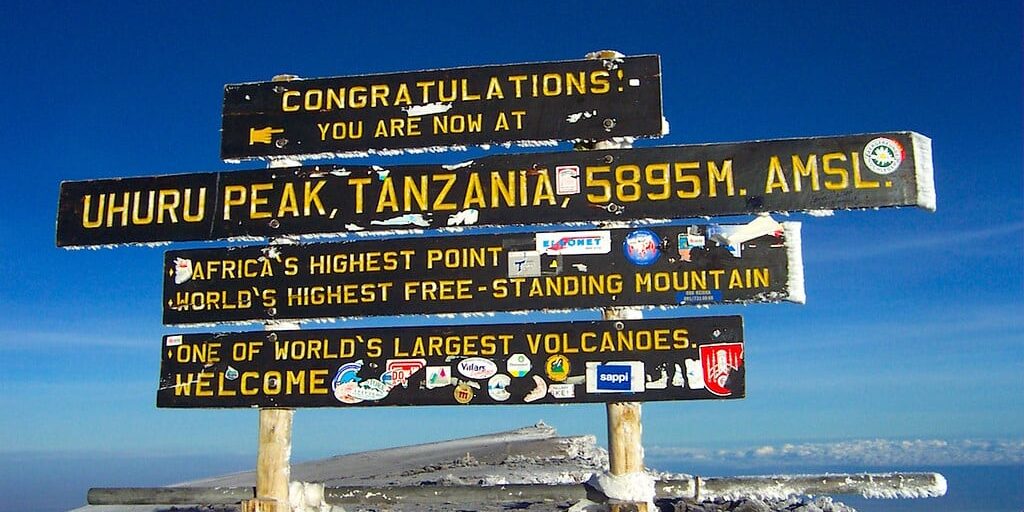
Hiking Mount Kilimanjaro, Africa’s highest mountain and one of the iconic Seven Summits, is a life-changing adventure for travelers who want to experience East Africa beyond the safari circuit. Rising to 5,895 meters (19,341 feet) above sea level, Kilimanjaro is a dormant volcano formed by three cones: Kibo, Mawenzi, and Shira.
Most trekkers aim for Uhuru Peak, located on Kibo, the highest point on the continent. The journey to the top demands physical effort, mental strength, and patience, but the reward is unmatched: glaciers near the equator, sweeping savannah views, misty cloud forests, and the pride of standing on Africa’s rooftop.
At GoFurther, we believe that great adventures start with good planning. This guide is designed to help first-time climbers understand what to expect when hiking Mount Kilimanjaro and how to prepare for a safe, enjoyable, and successful trek.
Where Mount Kilimanjaro Is Located & How to Get There
Mount Kilimanjaro is found in northern Tanzania, close to the Kenya border. Most hikers arrive through Kilimanjaro International Airport (JRO), which connects easily to Moshi and Arusha.
From Dar es Salaam
Driving distance: ~599 km (about 9 hours)
Flight time: ~1 hour 10–20 minutes
From Dodoma
Flight time: ~40 minutes
GoFurther often combines Kilimanjaro trekking with overland travel and 4×4 adventures, making it easy to link your climb with safaris or cross-border trips in East Africa.
Best Time to Hike Mount Kilimanjaro
The best time to hike Kilimanjaro is during the dry seasons, when trail conditions are safer and views are clearer.
Recommended months
January to early March
June to October
Rainy seasons to consider carefully
Short rains: November to early December
Long rains: March to May
That said, Mount Kilimanjaro can be climbed all year round, and experienced operators can safely guide climbs even outside peak seasons.
Cost of Hiking Mount Kilimanjaro
The cost of hiking Mount Kilimanjaro typically ranges between $2,000 and $6,000 per person, depending on:
Route choice
Number of days
Group size
Level of service
On average, a 7-day Kilimanjaro climb with a reputable local operator costs around $2,700. This usually includes park fees, guides, porters, meals, safety equipment, and accommodation on the mountain.
Preparing for a Kilimanjaro Hike
Physical Preparation
Mount Kilimanjaro is a trekking peak, not a technical climb, but fitness is essential.
Recommended training
Cardio exercises (running, cycling, swimming) 3–5 times a week
Strength training focusing on legs and core
Practice hikes with a backpack to simulate real conditions
Training consistently for 3–6 months greatly improves your chances of reaching the summit.
Mental Preparation
Altitude, cold temperatures, and long trekking days can be mentally challenging. Understanding altitude sickness, pacing yourself, and staying positive are key parts of a successful Kilimanjaro climb.
Essential Hiking Gear for Kilimanjaro
Your support team will carry most shared equipment, but personal gear is your responsibility. Weather on Kilimanjaro changes quickly, from tropical heat to freezing temperatures.
Key items to pack
Moisture-wicking base layers
Fleece or down jacket
Waterproof and windproof jacket and pants
Durable hiking trousers and shorts
Waterproof hiking boots with ankle support
Warm hat and gloves for summit night
Hiking socks
20–30L daypack
Sunglasses, sunscreen, headlamp, refillable water bottle
Sleeping bag rated for sub-zero temperatures
Trekking poles are usually provided by guides and are highly recommended.
Choosing the Best Kilimanjaro Route

Marangu Route : The easiest route with hut accommodation, suitable for beginners.
Machame Route : The most popular route, offering excellent scenery and better acclimatization.
Lemosho Route : One of the most scenic and best routes for acclimatization.
Rongai Route : Less crowded, approaching from the north near the Kenya border.
Umbwe Route : The steepest and most challenging, suited for experienced trekkers.
Northern Circuit : A longer route with the highest success rate and fewer crowds.
For first-time hikers, Machame and Lemosho are widely recommended.
Acclimatization & Altitude Sickness
Proper acclimatization is critical when hiking Kilimanjaro.
Common symptoms
Headache
Nausea
Fatigue
Insomnia
Prevention tips
Walk slowly and steadily
Follow the “climb high, sleep low” principle
Drink 3–4 liters of water daily
Avoid alcohol and smoking
If symptoms worsen, descending is the safest option.
What a Typical Day on Kilimanjaro Looks Like
Days usually start around 6:00 AM with breakfast, followed by 5–8 hours of hiking. Lunch is served on the trail, and evenings are spent at camp where porters have already set up tents and prepared meals.
Summit day begins around midnight. The final push to Uhuru Peak takes 6–8 hours, followed by a long descent to lower altitude.
Safety & Responsible Travel
Your safety depends on choosing an experienced and responsible operator. At GoFurther, we emphasize:
Trained local guides
Proper acclimatization schedules
Emergency protocols and first-aid readiness
Always listen to your guide and respect your body’s limits.
Cultural Experience on Kilimanjaro
Hiking Kilimanjaro is also a cultural journey. You’ll interact closely with local guides, porters, and cooks—many from the Chagga community. Respect, fair treatment, and appreciation are essential parts of responsible trekking.
Final Thoughts: Go Further on Kilimanjaro
Hiking Mount Kilimanjaro is a once-in-a-lifetime adventure that combines physical challenge, natural beauty, and cultural connection. With proper preparation and the right support, reaching the summit is achievable for determined trekkers of all backgrounds.
At GoFurther, we help travelers go beyond the ordinary—whether that means climbing Kilimanjaro, exploring East Africa by 4×4, or combining trekking with unforgettable safari experiences.



That is a good tip especially to those new to the blogosphere.
Simple but very accurate information… Many thanks for sharing this one.
A must read article!