We are 4×4 rental self drive experts offering you 4×4 vehicles and equipment to discover some of Africa’s most pristine wilderness areas. It is our mission to let you experience Africa at your own pace on a 4×4 self-drive safari.
GoFurther 4×4 Car Rentals welcomes you to Kenya, a land brimming with natural wonders, vibrant cultures, and rich history! With 7 years experience of renting vehicles for both self drive and chauffeur driven in Uganda and neighboring Rwanda, we are excited to extend our services to Kenya.
Whether you are driving through Nairobi city, exploring the stunning landscapes of the Great Rift Valley, lounging on the sandy beaches of the Indian Ocean, or embarking on a wildlife safari in the renowned Masai Mara, we are your trusted travel partners and we’ll journey with you as you unlock all the beauty this incredible country has to offer.
In a world where travel needs to be quick and easy, we stand out as a leading car rental service dedicated to providing you with a hassle-free experience. At GoFurther 4×4 Car Rentals, we offer vehicles that that will meet all your travel needs and ensure that you have a safe trip. We provide 4×4 vehicles that will take you through the roughest and slipperiest of roads mostly found in Kenya’s safari destinations. Our vehicles are available for self drive, long term or short term but we advise that you hire one with a driver if you are a first time visitor to Kenya for extra convenience.
Land cruiser hardtop
The all-terrain master cruiser, the land cruiser hardtop is a fulltime 4×4 and fully designed for such challenges right from manufacturing. The Japan made Toyota land cruiser hardtop mainly seen with the World Food Organization, UN vehicles, army pick-up seen across which guarantees their trust.
The land cruiser hardtop used for safaris is a customized to specifically handle the safari world. This vehicle can cruise through the thought of being hard to cruise in roads. The car is designed with a high ground clearance, has a pop up rooftop finest for game viewing. The amazing cruiser as well is customized to make an with the high profile for handling and transporting tourist. Driving all the amazing and exciting tourist destinations mainly for safaris, one need to have such a car.
The land cruiser hardtop without the extension is the fleet available to hire for self-drive trips, and the land cruiser extended carrying 9 passengers is only available with a driver.
This is a 4×4 luxurious for adventures, so hire a land cruiser hardtop and experience magical land of Africa.
The East African joker, the Prado Toyota land cruiser is the common car to use for safari even in Kenya. This is very common being the easy vehicle to get along for self-drive at all times and through all the region. The Toyota Land Cruiser Prado is available in variations and these are Prado TX, Prado V8, Prado GX, and Prado VX.
The Toyota Prado Land Cruiser is a paramount selection if intending for a safari in Kenya. However, must understand that Prado variation don’t offer the same experience. The Prado V8 is the most trusted to ramble through all kinds of terrains with its feel of a luxurious offer. All selections offer and guarantee comfort, but the V8 is superb.
All selections are available with a driver or even for self-drive experience, hiring a Prado selection is a bit cheaper than hiring a land cruiser hardtop in all aspects. These selections in the hiring rates respectively to accommodate travelers budget requests. The Toyota Prado Land cruisers used for safaris are customized with either a pop up rooftop or rooftop tent for camping experience if requested.
All the Land Cruiser Prado selections have almost the same functions coming with automation transmission, can be available mainly with diesel engine or petrol. They have a large boot space for larger cargo, enough leg space and for safari purposes are only limited to a maximum of 4 passengers seated comfortably and each sharing a window.
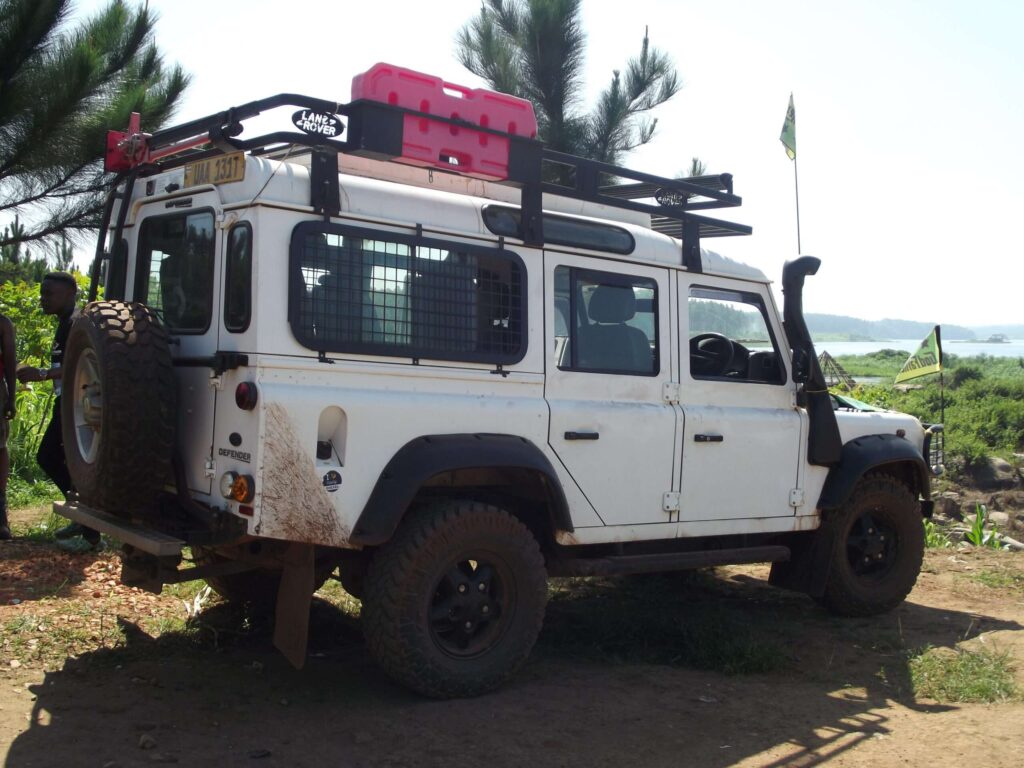
Land Rover
There is quit one of the strongest cars you can even use for safaris. These are not so common though are available through various car rental agencies like Gofurther 4×4 Car Rental. These safari customized cruisers are suitable for several adventures undertakings offering experiences such as scenic drives, off-road adventures, photographing and are suitable for family trips.
Almost the same use and purpose, and experiences enjoyed with the hardtop and Prado are all enjoyed with the Land Rover. It’s the all-times 4×4 vehicle making able to cruise through all the impassable. When opting to rent a car for a self-drive on a holiday in Kenya reflect on the 4×4 car rental. The Land Rover is a fulltime 4×4 cruiser, comes with a manual transmission, and uses diesel engine.
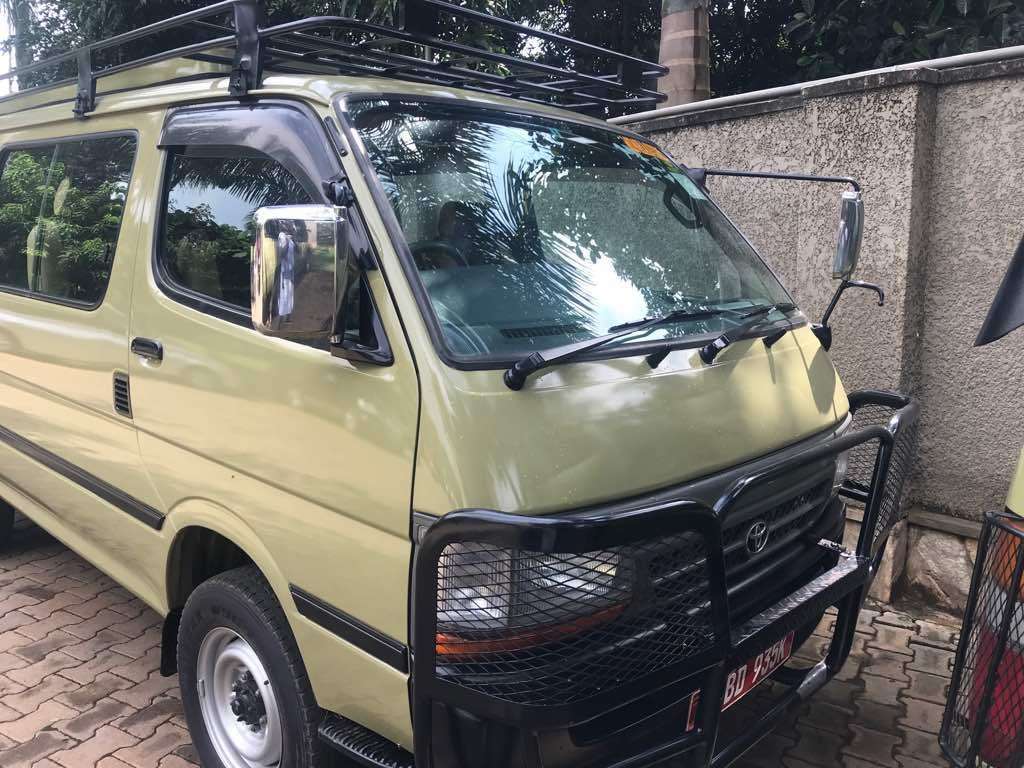
Smaller groups of 9 to 11 seater available for your group, family or company holiday. These are mainly available and hired with a driver. We have secured safari customized vans to accommodate people traveling in groups or family trips. The customized vans for safaris have a pop up for game viewing, have enough seating spaces even on a long journey, enough space to carry as much luggage.
The vans are luxurious in nature to offer a certain accepted comfort for your trip, have various phone charging spaces, with an electric freezer for cold drinks all times. The Vans available have vehicles varying rates which accommodate all travelers from luxury, mid-range and budget considerate travelers.
Self-drive guidelines every traveler in Kenya should know
Renting a car for self-drive in Kenya gives you the freedom to explore Nairobi, the Maasai Mara, Amboseli, Tsavo, Nairobi, the Kenyan coast, and other destinations without following a fixed tour schedule. However, driving in Kenya requires more than knowing how to operate a vehicle. Foreign travellers also need to understand Kenya’s specific traffic rules, road signs, speed restrictions, enforcement practices, and requirements for rental vehicles.
Kenya drives on the left, like Uganda, Tanzania, and several other countries in East Africa. Nevertheless, that does not mean the traffic rules and driving environment are identical. Kenya has its own legal framework under the Traffic Act (Cap. 403), while the National Transport and Safety Authority (NTSA) oversees important aspects of road transport and driver and vehicle regulation.
For visitors using a rental car, understanding these requirements before getting behind the wheel can prevent fines, accidents, delays, and unnecessary disagreements with traffic authorities.
Drive on the left and overtake on the right
Kenya follows left-hand traffic. You should therefore keep to the left side of the road unless you are overtaking or another situation requires you to move across the carriageway.
When overtaking, drivers generally pass on the right and should return to the left once they have completed the manoeuvre safely. Do not overtake where road markings or signs prohibit it, or where you cannot see far enough ahead to complete the manoeuvre safely.
This becomes particularly important on highways outside Nairobi. Long straight sections can tempt visitors to overtake quickly, yet trucks, buses, motorcycles, pedestrians, and vehicles entering from side roads can create unexpected hazards.
If you are accustomed to driving on the right, spend some time adjusting before attempting long-distance driving.
Understand Kenya’s speed limits instead of guessing
Speed limits in Kenya depend on the type of road and the location. Therefore, travellers should follow the posted speed signs rather than assuming that one national limit applies everywhere.
Under Kenya’s traffic regulations, the general maximum speed for many motor vehicles on a highway is 110 km/h, while lower limits apply on other roads and in built-up areas. Certain categories of vehicles also operate under different restrictions.
However, the posted limit always matters. Authorities can impose lower limits on particular sections because of road design, construction, schools, settlements, pedestrian activity, or other safety concerns.
For a self-drive traveller, this means you should not simply set your cruise control to 110 km/h whenever you leave Nairobi. Watch the signs and adjust your speed accordingly.
The National Transport and Safety Authority (NTSA) and the National Police Service have continued to emphasize speed management as part of Kenya’s road-safety efforts. Speed cameras and other enforcement mechanisms also operate on selected roads.
The Nairobi expressway has its own considerations
One feature that may surprise visitors from neighbouring countries is Kenya’s Nairobi Expressway. The expressway provides a faster connection between parts of Nairobi and Jomo Kenyatta International Airport, although travellers should understand that it operates differently from ordinary city roads.
The expressway is a controlled-access toll road. It has designated entry and exit points, and drivers must follow the applicable toll payment procedures.
Rental customers should therefore ask their car rental company how toll payments work before using the expressway. Do not assume that the rental price automatically includes toll charges.
Also remember that the expressway is not an unrestricted high-speed route. You must obey the posted speed limits and other traffic regulations.
Kenya uses yellow rear registration plates
One of the easiest ways for a foreign driver to recognize vehicles in Kenya is through their registration plates.
Kenyan vehicles generally use white plates at the front and yellow plates at the rear. This differs from some countries where both front and rear plates use the same background colour.
The distinction can help you identify vehicles while driving, particularly when following traffic in unfamiliar surroundings.
Rental vehicles should display valid registration plates and required documentation. If something appears unusual about the vehicle’s registration or documentation when you collect it, ask the rental company to clarify the matter before driving away.
Seat belts are not optional
Kenya takes seat-belt use seriously. Drivers and passengers should wear seat belts whenever the vehicle is moving, and rental travellers should ensure that every passenger has access to a functioning restraint.
Do not treat the rear seats differently simply because passengers are sitting behind you. Seat belts protect occupants in crashes regardless of where they sit.
Before accepting a rental car, check that the belts work properly and that the vehicle has enough restraints for everyone travelling.
Children require appropriate restraint
Families renting vehicles in Kenya should pay particular attention to child safety. Children should not simply sit wherever there happens to be space in the vehicle.
The relevant Kenyan traffic regulations provide requirements concerning the carriage and restraint of children. Because rental companies may have different policies regarding child seats, parents should request an appropriate child restraint before collecting the vehicle.
Do not assume that holding a child on an adult passenger’s lap provides adequate protection. Instead, ask the rental company what approved child restraint options it can provide and whether they meet current Kenyan requirements.
Do Not Use Your Phone While Driving
Using a mobile phone while driving creates one of the most common distractions on modern roads. Kenya’s traffic rules restrict drivers from using handheld mobile devices in a way that interferes with proper control of the vehicle.
For travellers, this matters because navigation often depends on a smartphone. Set your route before moving, use a hands-free system where appropriate, or ask a passenger to handle navigation.
Do not hold the phone in your hand while driving simply because you are checking Google Maps for the next turn.
If you need to make a call, respond to a message, or change your navigation route, pull over somewhere safe.
Kenya has strict rules against drink-driving
Never assume that having one drink before driving is acceptable because you still feel capable of controlling the vehicle.
Kenyan law provides for offences involving driving under the influence of alcohol or drugs, and traffic authorities conduct enforcement operations. The legal consequences can include arrest, prosecution, fines, and other penalties.
For a self-drive traveller, the safest approach is straightforward: if you are driving, do not drink alcohol.
This becomes especially important during safari trips because travellers sometimes have drinks at lodges before driving back to their accommodation. Plan your evening so that you do not need to drive after consuming alcohol.
Do not cross a continuous yellow line to overtake
Road markings communicate important restrictions in Kenya, and visitors should not treat them as decoration.
Continuous centre lines generally indicate restrictions on crossing into the opposing lane. Where road markings prohibit overtaking, remain behind the vehicle ahead until the restriction ends.
You should also pay attention to broken and continuous lines, lane arrows, pedestrian crossings, stop lines, and directional markings.
If you are unsure about a road marking, slow down and follow the more conservative interpretation rather than copying another driver’s manoeuvre.
Give way according to signs and road markings
Intersections in Kenya can become confusing for visitors because traffic behaviour in busy towns may look less predictable than the formal road rules suggest.
Follow stop signs, give-way signs, traffic lights, lane markings, and police directions. At a controlled junction, traffic signals take precedence over assumptions about who should proceed first.
Roundabouts deserve particular attention. Approach them at an appropriate speed, observe the signs and lane markings, and give priority according to the applicable road rules.
Do not enter a roundabout simply because another driver has stopped. Look at the traffic situation yourself before proceeding.
Obey police and traffic officers
Kenyan traffic officers and police officers have authority to regulate traffic and enforce road rules. If an officer directs you to stop or gives instructions controlling traffic, follow those instructions.
This is particularly important at checkpoints, busy junctions, accident scenes, roadworks, and temporary traffic diversions.
If an officer stops your rental vehicle, remain calm and provide the requested documentation. Your rental company should tell you which vehicle documents you need to carry and what to do if you receive a traffic citation.
Know the difference between a police check and a rental problem
A foreign visitor can become unnecessarily nervous when stopped by authorities simply because the process is unfamiliar.
Keep your passport, driving licence, rental agreement, and relevant vehicle documents accessible. However, do not leave them scattered around the vehicle where they can be lost.
If you receive a legitimate traffic offence notice, ask the rental company how the process works. Rental agreements can contain provisions concerning traffic fines, administrative charges, or penalties incurred while the vehicle is in your possession.
Read those provisions before signing the agreement.
Be particularly careful around matatus
Matatus are an important part of Kenya’s public transport system. They operate throughout the country and can behave differently from private vehicles.
Expect sudden stops to pick up or drop off passengers, lane changes, and vehicles entering traffic from busy roadside areas.
Do not compete with a matatu for road space. Leave sufficient following distance and anticipate that passengers may cross the road after getting out.
The same principle applies to buses and motorcycles. Defensive driving is much safer than trying to predict what another driver will do.
Motorcycles and boda bodas need extra attention
Just like Uganda, motorcycles are common across Kenya, particularly in towns and rural areas. They can move through traffic gaps that a car cannot use and may approach from either side of your vehicle.
Before changing lanes, check your mirrors and blind spots carefully. Signal early and avoid moving across another road user’s path abruptly.
When turning left or right, check for motorcycles approaching alongside your vehicle. A motorcycle can remain outside your immediate field of vision even when you have checked the road ahead.
Do not park wherever you find space
Parking regulations apply in Kenyan towns and cities, and Nairobi has designated parking areas and controlled zones.
Do not assume that a space beside a road is automatically available for parking. Look for signs, road markings, parking attendants, and designated parking areas.
Avoid blocking entrances, pedestrian paths, junctions, bus stops, or other restricted areas.
If you are visiting Nairobi, ask your hotel or accommodation about secure parking before leaving the rental vehicle. In busy areas, secure parking is preferable to leaving luggage visible inside the vehicle.
Give way to emergency vehicles
When an ambulance, fire engine, or other authorized emergency vehicle approaches with warning signals, give it room to pass.
Do not follow closely behind an emergency vehicle simply to move through traffic faster. Instead, create space and allow the emergency response vehicle to proceed.
This is especially important on congested urban roads where emergency vehicles may need to manoeuvre through limited gaps.
Do not drive on the shoulder to escape traffic
One driving behaviour that visitors may encounter is motorists using road shoulders to bypass congestion. Seeing other vehicles do this does not make it legal or safe.
The shoulder may contain pedestrians, cyclists, broken-down vehicles, motorcycles, or other hazards. It can also interfere with emergency vehicles.
Stay within your designated lane unless the road markings, police instructions, or a legitimate traffic situation require otherwise.
Take extra care at pedestrian crossings
Pedestrian crossings require particular attention in Kenya’s urban areas. Slow down when approaching a crossing and be prepared to stop for pedestrians who are crossing or clearly preparing to cross.
Do not accelerate through a crossing simply because you believe you can pass before someone reaches your lane.
Outside cities, pedestrians may also walk along highways where formal walkways do not exist. Therefore, maintain a reasonable speed whenever passing through villages and trading centres.
Wildlife has right of way in safari areas
This is one of the biggest differences between ordinary Kenyan driving and safari driving.
Once you enter a national park or conservancy, the road environment changes. Animals can cross or stand on tracks, and you must follow the rules of the relevant park or wildlife authority.
The Kenya Wildlife Service (KWS) regulates activities in many protected areas. Drivers should follow designated roads, observe applicable speed limits, and avoid disturbing wildlife.
Never drive aggressively towards an animal to obtain a photograph. Do not block an animal’s movement or surround it with other vehicles.
A self-drive safari requires patience. Sometimes the correct action is simply to stop and wait.
Do not leave your vehicle in a national park without permission
A common mistake among first-time safari drivers is assuming they can step out whenever they find an interesting animal or viewpoint.
That is not generally how safari driving works. Wildlife can pose a serious danger even when an animal appears calm.
Remain inside the vehicle unless you are in a designated area where leaving the vehicle is permitted. Follow instructions from park authorities, rangers, and accommodation operators.
This rule is particularly important around elephants, buffaloes, lions, hippos, and other potentially dangerous wildlife.
Understand roadside speed enforcement
Kenya has increasingly used technology and enforcement measures to address speeding and other road offences. Depending on the road and current enforcement arrangements, motorists may encounter speed cameras, police checks, traffic patrols, and other monitoring systems.
Therefore, do not rely on the idea that a remote-looking road has no enforcement.
For rental customers, traffic offences can also have financial consequences beyond the original fine. Your rental agreement may allow the company to recover penalties or administrative costs associated with offences committed during your rental period.
Avoid driving when extremely tired
Kenya’s long distances can tempt travellers to cover enormous stretches in one day.
For example, combining Nairobi, Maasai Mara, Lake Nakuru, Amboseli, and the coast into a short itinerary can produce very long driving days. Fatigue can become just as dangerous as speeding.
Take regular breaks and avoid driving when you feel sleepy. If possible, divide long journeys between destinations rather than trying to reach your next accommodation late at night.
This is especially important for self-drive safaris because the combination of rough roads, wildlife, heat, and long distances can make driving more tiring than travellers expect.
Check the vehicle’s insurance and road restrictions
A rental company may place restrictions on where you can take its vehicles. Some agreements distinguish between paved roads, public dirt roads, national park tracks, and severe off-road terrain.
Do not assume that renting a 4×4 automatically gives you permission to drive anywhere.
Before signing the contract, ask whether the vehicle can enter your planned national parks and whether the insurance remains valid on those roads. Also ask about tyres, windscreens, underbody damage, recovery, and water crossings.
These details can make a major financial difference if something goes wrong.
Carry the correct vehicle documents
The vehicle should have the documents required for lawful operation in Kenya. Your rental company should explain which documents remain in the vehicle and which documents you should personally carry.
Do not remove vehicle documents from the car unless the rental company instructs you to do so.
If you plan to cross into Uganda or Tanzania, tell the rental company before your trip. Cross-border travel may require additional authorization and insurance documentation.
Do not assume Kenya and Uganda have identical traffic rules
Kenya and Uganda share several driving characteristics. Both use left-hand traffic, both have extensive rural road networks, and both have major safari destinations.
Nevertheless, a driver should not transfer every rule from one country to another.
Kenya has its own traffic legislation, enforcement procedures, road signage, toll-road arrangements, vehicle regulations, and wildlife-management requirements. Consequently, a traveller who has previously driven in Uganda should still familiarize themselves with Kenyan regulations before collecting a vehicle.
The same principle applies to travellers arriving from Tanzania, Rwanda, South Africa, the United Kingdom, or other countries.
Top locations in Kenya
Nairobi
Nairobi; where urban life meets the wild at Nairobi National Park.
Nairobi is Kenya’s capital and the main gateway for international travellers arriving in the country. Founded as a railway settlement in the late nineteenth century, the city developed rapidly after becoming the capital of the British East Africa Protectorate in 1907. Today, Nairobi is a modern commercial centre with a fascinating mixture of history, culture, business and wildlife.
One of its most unusual attractions is Nairobi National Park, located only a short distance from the city centre. Visitors can see lions, giraffes, zebras, buffaloes, rhinos and other wildlife against the backdrop of Nairobi’s skyline.
The David Sheldrick Wildlife Trust, Giraffe Centre and Karen Blixen Museum are also popular attractions. Visitors interested in history can explore the Nairobi Railway Museum and various cultural and historical sites around the city.
Nairobi also provides opportunities to engage with Kenyan cuisine, art and contemporary culture. Local markets, restaurants, galleries and cultural centres offer visitors a chance to experience modern Kenyan life beyond the safari experience.
Maasai Mara National Reserve
Wildebeest crossing the Maasai Mara plains during the Great Migration
Maasai Mara is arguably Kenya’s most famous safari destination. Located in southwestern Kenya near the Tanzanian border, the reserve forms part of the greater Mara-Serengeti ecosystem.
The reserve takes its name from the Maasai people and the Mara River, with “Mara” traditionally associated with the landscape’s characteristic scattered trees and shrubs. The Maasai have lived in this region for generations, developing pastoral traditions closely connected to cattle, land and community life.
The Maasai Mara is famous for its extraordinary wildlife. Visitors can see lions, elephants, leopards, cheetahs, buffaloes, giraffes, zebras and numerous antelope species. The reserve is also associated with the Great Wildebeest Migration, when millions of wildebeest, accompanied by zebras and other animals, move between the Serengeti and Maasai Mara ecosystem in search of fresh grazing.
Game drives are the main activity, while hot-air balloon safaris provide an aerial perspective of the savannah. Visitors can also participate in guided nature walks where permitted and visit Maasai communities.
A cultural visit can include learning about traditional homes, beadwork, dancing, cattle keeping and community traditions. Travellers should choose community experiences that are respectful and genuinely benefit local residents.
Amboseli National Park
Elephants grazing with Mount Kilimanjaro in the background at Amboseli National Park
Amboseli National Park lies in southern Kenya close to the Tanzanian border and is famous for its spectacular views of Mount Kilimanjaro. The mountain, although located across the border in Tanzania, provides an extraordinary backdrop to wildlife photographs.
The park was established as a national park in 1974, following earlier protection as a game reserve. Its ecosystem consists of open plains, wetlands, woodlands and seasonal habitats.
Amboseli is particularly famous for its large elephant population. Visitors can also see lions, cheetahs, buffaloes, zebras, giraffes, hippos and various antelope species. The wetlands attract numerous birds and provide water for wildlife during dry periods.
Game drives are the primary activity, while bird watching and photography are also popular. Cultural visits to Maasai communities can introduce travellers to traditional dances, beadwork, livestock keeping and local lifestyles.
Amboseli works particularly well as part of a combined Kenya-Tanzania safari because travellers can continue south towards Arusha and other northern Tanzania destinations.
Diani Beach
Relax beside the turquoise waters and white sands of Kenya’s tropical Diani Beach.
Diani Beach is one of Kenya’s most famous coastal destinations, located south of Mombasa along the Indian Ocean. Its white sands, warm tropical waters and palm-lined coastline make it an excellent destination for travellers looking to combine a safari with a beach holiday.
The wider Kenyan coast has a long history shaped by African, Arab, Persian, Indian and European influences. Centuries of Indian Ocean trade contributed to the development of Swahili culture, architecture, cuisine and language.
Visitors to Diani can enjoy swimming, snorkelling, diving, kite surfing, paddleboarding, boat trips and deep-sea fishing. The surrounding coastline also provides opportunities for dolphin watching and marine excursions.
For cultural experiences, travellers can visit nearby villages, interact with local communities and explore Swahili food and traditions. Diani is also conveniently located for excursions to Shimba Hills National Reserve, where visitors can experience wildlife and coastal forest.
Mombasa
Historic Fort Jesus overlooking the Indian Ocean in Mombasa, Kenya
Mombasa is Kenya’s oldest major coastal city and one of East Africa’s most historically significant ports. Its history stretches back many centuries, with the city developing as part of the wider Indian Ocean trading network.
The city has been influenced by African, Arab, Persian, Portuguese, Indian and British cultures. This history is particularly visible in its architecture, food and traditions.
One of the most important attractions is Fort Jesus, built by the Portuguese in the sixteenth century to protect their interests along the coast. The fort is now a UNESCO World Heritage Site and provides insight into the complex history of the region.
Visitors can also explore Mombasa Old Town, with its narrow streets, historic buildings, carved doors and Swahili architecture. Other attractions include the Old Port, Haller Park and Mamba Village.
Mombasa offers activities ranging from city tours and cultural experiences to snorkelling, diving, fishing and beach excursions. Trying Swahili dishes such as biryani, pilau and seafood is another important part of experiencing the coast.
Lamu
Traditional dhow boat sailing along the historic Swahili coast of Lamu
Lamu offers a completely different experience from Kenya’s major safari destinations. Located along the northern coast, Lamu Old Town is a UNESCO World Heritage Site and one of the best-preserved traditional Swahili settlements in East Africa.
The town has a history stretching back centuries and developed through Indian Ocean trade. Its architecture reflects centuries of interaction between African, Arab, Persian, Indian and European communities.
One of the best ways to explore Lamu is on foot because the historic town has narrow streets where donkeys remain an important form of transport. Traditional dhow boats also remain an important part of coastal life.
Visitors can take dhow cruises, explore historic buildings, visit local markets and enjoy the beaches of Lamu Island and neighbouring areas. Cultural engagement is particularly strong here, with opportunities to learn about Swahili architecture, Islamic traditions, traditional crafts, cuisine and maritime culture.
Travellers should remember that Lamu is culturally conservative in many areas, so respectful dress and behaviour are important, particularly away from the beaches and tourist establishments.
Lake Nakuru National Park
Greater flamingos around Lake Nakuru National Park
Lake Nakuru National Park lies in the Great Rift Valley and is known for its scenic landscapes, birdlife and rhino conservation. The park surrounds Lake Nakuru, a shallow alkaline lake that has historically attracted large numbers of flamingos.
The lake’s birdlife remains one of its major attractions, although flamingo numbers can fluctuate depending on water levels and environmental conditions.
The park also supports black and white rhinos, lions, leopards, buffaloes, giraffes, zebras and several antelope species. Visitors can enjoy game drives, bird watching and photography.
Nearby attractions include the dramatic viewpoints and landscapes of the Great Rift Valley. Travellers interested in geology and geography can learn about the geological forces that created this enormous depression running through East Africa.
Samburu National Reserve
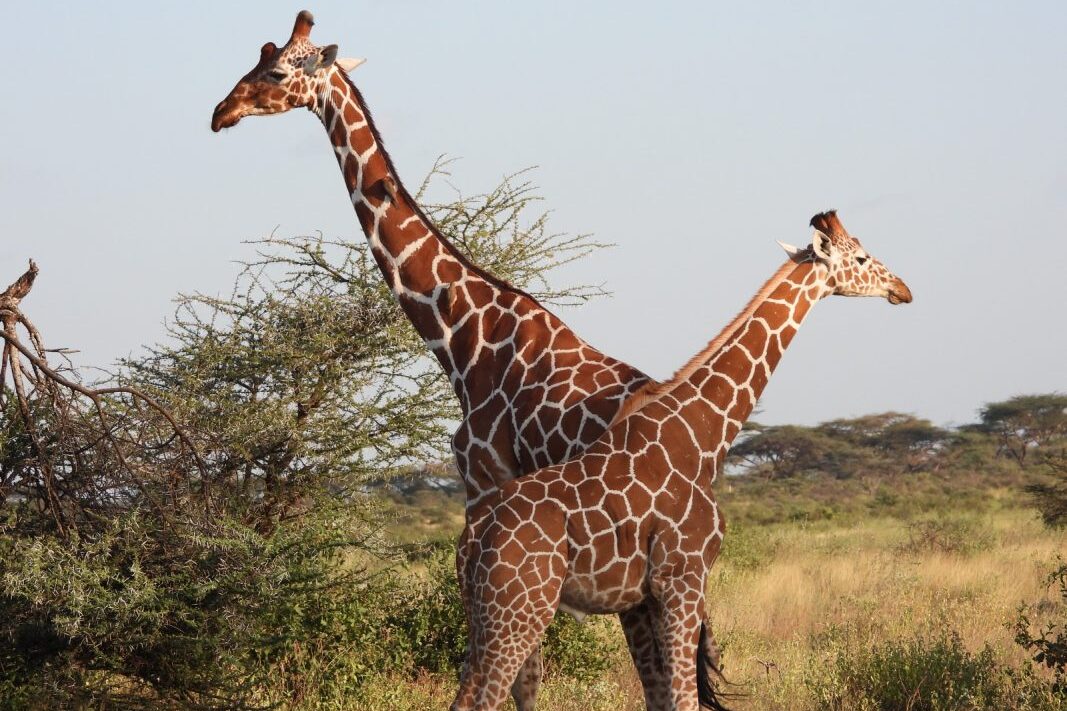
Reticulated giraffe walking across the dry savannah of Samburu National Reserve
Samburu National Reserve is located in northern Kenya along the Ewaso Ng’iro River. The landscape is considerably drier and more rugged than the lush coastal and central regions, creating a unique safari environment.
Samburu is famous for several species associated with the northern Kenyan ecosystem, including the reticulated giraffe, Grevy’s zebra, gerenuk, Beisa oryx and Somali ostrich. These are sometimes collectively referred to as the “Samburu Special Five.”
The reserve also supports elephants, lions, leopards, buffaloes and numerous bird species. Game drives provide the main wildlife experience, while guided nature experiences can offer a closer look at the landscape.
The region is also home to the Samburu people, whose pastoral culture is closely connected to livestock and the environment. Community visits can introduce visitors to traditional homes, beadwork, music, dancing and local customs.
As with Maasai cultural experiences, visitors should use reputable community tourism programmes that respect local traditions and provide tangible benefits to residents.
Tsavo National Parks
Vast wilderness and famous red elephants make Tsavo one of Kenya’s iconic safari destinations.
Tsavo East and Tsavo West National Parks together form one of Kenya’s largest protected wildlife landscapes. They are located between Nairobi and Mombasa, making them particularly convenient for travellers combining safari and beach holidays.
Tsavo East is known for its vast open landscapes, elephants and the dramatic red soil that often gives the park’s elephants a reddish appearance. Tsavo West has more varied terrain, including volcanic landscapes, hills, springs and dense vegetation.
Important attractions include Mzima Springs, the Shetani Lava Flows and scenic viewpoints. Wildlife includes elephants, lions, leopards, buffaloes, giraffes, zebras and numerous antelope species.
Game drives are the main activity, while bird watching and nature experiences provide additional opportunities. Tsavo’s location makes it possible to travel from a safari lodge directly towards the Kenyan coast.
Mount Kenya
Explore the dramatic alpine landscapes of Mount Kenya, Africa’s second-highest mountain.
Mount Kenya is Africa’s second-highest mountain after Kilimanjaro and one of Kenya’s most important natural landmarks. The mountain rises dramatically above the surrounding landscape and supports a range of ecosystems, from forests to alpine environments.
Mount Kenya National Park was established to protect the mountain’s unique environment and biodiversity. The mountain also has deep cultural importance, particularly among communities living around it. The Kikuyu people traditionally regard the mountain as sacred and historically associated it with their spiritual beliefs.
Mount Kenya offers hiking, trekking, mountain climbing, bird watching and nature walks. Several routes lead towards the higher elevations, although reaching the summit requires proper preparation, equipment and acclimatisation.
Travellers who do not want a demanding climb can explore the lower slopes and surrounding forests. The region also provides opportunities to experience local farming, cuisine and community life.
Hell’s Gate National Park
Dramatic cliffs and volcanic landscapes at Hell’s Gate National Park
Hell’s Gate National Park is one of Kenya’s most unusual parks because visitors can explore parts of it on foot or by bicycle, unlike many traditional safari destinations where visitors remain in vehicles.
Located near Lake Naivasha in the Great Rift Valley, the park is characterised by dramatic cliffs, gorges, volcanic formations and open grasslands. Its landscape has also inspired locations associated with film productions.
Wildlife includes zebras, giraffes, buffaloes, warthogs and various antelope species. Predators are present but are less commonly encountered than in destinations such as Maasai Mara.
Rock climbing, hiking, cycling and gorge exploration are among the most popular activities. The park can easily be combined with a boat trip on nearby Lake Naivasha.
Lake Naivasha
Hippos and birdlife along the shores of scenic Lake Naivasha
Lake Naivasha is a freshwater lake in Kenya’s Great Rift Valley and a popular destination for travellers seeking a quieter experience between safari destinations.
The lake is surrounded by acacia woodland, farms and scenic landscapes. Hippos are commonly associated with the lake, while its shores attract numerous bird species.
Boat trips provide an opportunity to observe hippos and birds from the water. Visitors can also explore Crescent Island, where guided walking safaris allow travellers to experience wildlife without a traditional safari vehicle.
The region is also important for Kenya’s flower-growing industry, making it an interesting destination for travellers interested in agriculture and local economic activities.
Why Choose our Kenya Car Rental Services
We assure you of vehicles that are well maintained and cleaned, in good mechanical condition and well insured.
Our diverse fleet of vehicles ranges from compact cars perfect for city navigation to spacious SUVs ideal for rugged terrains and adventurous journeys. We have a cars to suit every need and our fleet ensures that you find the perfect vehicle.
We also understand that travel budgets can vary significantly and that’s why our prices are fair, competitive, transparent and there are no hidden fees. Our customizable packages ensure that you have the freedom to explore at your own pace, without feeling rushed. Be rest assured that you are getting excellent value for your money.
We have a friendly online booking platform that allows you to reserve your vehicle in just a few clicks. With instant confirmation, you can enjoy peace of mind knowing your transportation is secured before you even land.
GoFurther 4×4 Car Rentals Kenya also boasts 24/7 Customer support with a dedicated support team available around the clock to assist you with any inquiries or concerns. Whether you have questions about your booking, need assistance on the road, or require recommendations for your travels, our knowledgeable staff is here to help make your journey smooth and enjoyable.
One of our services that stands out is the airport pickup and drop off. All you have to do is share your flight details and our driver will be there to receive you, and help you with your luggage.
Our vehicles are well insured to even cross borders across East Africa should you feel the need to explore other sights beyond Kenya. Specify this need in advance so that we can make the necessary arrangements.
AFCON 2027 will bring football supporters to Uganda, Kenya, and Tanzania, creating an opportunity to explore East Africa beyond the stadiums. But with matches, national parks, cultural attractions, and major cities spread across three countries, how travellers move around the region could shape their entire experience. Cross-border car rental, private transfers, and carefully planned road…
Internet in Kenya is faster, more affordable and more accessible than ever before, making it easy to stay connected while exploring one of Africa’s most iconic travel destinations. Reliable internet allows travelers to navigate confidently, share unforgettable moments, communicate with loved ones, and even work remotely during your journey. Kenya is widely recognized as one…
The Kenya Visa is one of the most sought-after visas for travelers seeking unforgettable safari experiences. Every year, millions of visitors arrive to witness the Great Wildebeest Migration, explore world-famous national parks, relax along the Indian Ocean coast, and experience the country’s rich cultural heritage. Before planning your journey, however, you should understand the current…