
Imagine waking up above the ground, unzipping your tent and watching the morning light spread across the Ugandan wilderness. Your 4×4 is parked below, your next destination is still ahead, and you do not have to pack up a hotel room before starting the day’s adventure. With a car rental with a rooftop tent in Uganda, your vehicle and accommodation travel with you wherever the road leads.
GoFurther 4×4 Car Rental provides reliable 4×4 vehicles equipped with rooftop tents for travellers who want to experience Uganda through self-drive camping. Drive through scenic countryside, explore national parks, spend nights at designated campsites and wake up closer to nature.
Instead of carrying a conventional tent and finding space for it inside the vehicle, a rooftop tent remains secured on top of your 4×4 while you travel. When you reach your campsite, you park the vehicle, unfold the tent and have your sleeping space ready.
The heart of this camping setup is the 4×4 vehicle. You are not simply hiring camping equipment; you are renting a vehicle designed to take you and your camping gear across Uganda’s varied roads. The vehicle provides space for passengers, luggage and essential camping equipment while the rooftop tent remains securely mounted above the vehicle.
A 4×4 is particularly useful for travellers exploring national parks and remote areas where roads can change from smooth tarmac to gravel, dirt and uneven tracks. The combination of a capable vehicle and rooftop tent makes it possible to travel between destinations during the day and establish a campsite when you reach your destination.
Depending on your group size and itinerary, we can advise you on the most suitable vehicle arrangement.
How a rooftop tent works
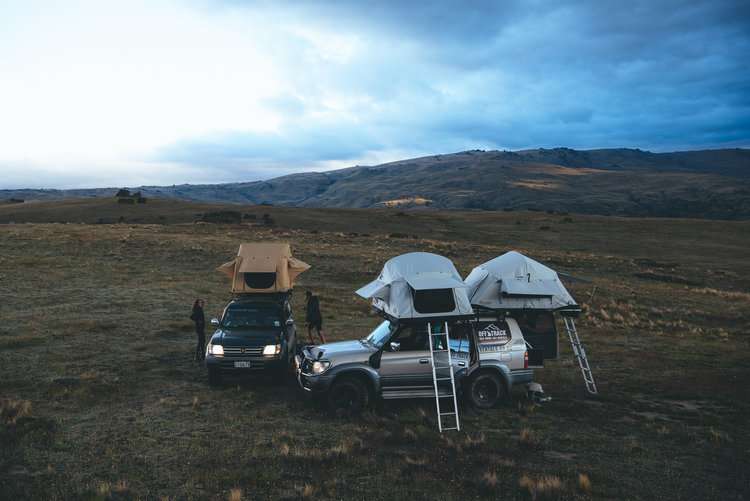
with a rooftop tent, you basically have a mobile home and can pitch it in the designated areas to enjoy an authentic African wildlife experience off the ground.
A rooftop tent is designed to remain folded and secured on the roof while you drive. Once you arrive at a suitable campsite, you park the vehicle on reasonably level ground and open the tent.
The folded tent expands above the vehicle, creating an elevated sleeping area. Most rooftop tent designs are built around a mattress and sleeping compartment, meaning you do not have to sleep directly on the ground.
Getting into the tent is usually done using a foldable ladder attached to the tent. When you are ready to leave, you pack your sleeping equipment, fold the tent down and secure it before continuing your journey. This makes the setup considerably different from traditional ground camping. You do not have to find a large area to pitch a conventional tent, drive tent poles into the ground or carry a bulky tent inside the vehicle.
Sleeping above the ground
One of the biggest attractions of rooftop camping is the elevated sleeping position. Instead of placing your sleeping tent directly on the campsite ground, you sleep above the vehicle.
This can provide a different camping experience, particularly when travelling through Uganda’s wilderness areas. The elevated design also creates separation between your sleeping area and the ground. However, it does not replace normal camping safety practices. You should always follow campsite rules and instructions from park authorities or campsite staff.
When camping in or near wildlife areas, never leave food, rubbish or other attractants around your campsite. Wildlife behaviour can be unpredictable, so follow the instructions provided by the relevant park or campsite authorities.
A Comfortable sleeping setup for road trips
Rooftop camping is designed to make sleeping outdoors more convenient without requiring a large camping setup. After a day of driving, hiking, sightseeing or wildlife viewing, you can return to your campsite and have your sleeping area ready without spending a long time pitching a tent.
The mattress provides a dedicated sleeping surface, while the elevated position allows air to circulate around the tent. Your experience will still depend on weather conditions, campsite facilities and the equipment provided with your rental.
For travellers who enjoy spending nights outdoors but want a more organised sleeping arrangement than traditional ground camping, a rooftop tent can be an attractive compromise between a conventional tent and lodge accommodation.
What it is like to travel with a rooftop tent

The Land Cruiser Hardtop with a rooftop tent is easy to travel with because the tent and sleeping gear are carefully folded and packed on top of the vehicle.
One of the most enjoyable parts of rooftop camping is that your accommodation travels with you. You can wake up, pack the tent, load your personal belongings and continue towards your next destination.
There is no need to check out of a lodge every morning or drive back to the same accommodation after spending the day exploring. This works particularly well for road trips where you want to move between several destinations.
For example, you could spend a night near Lake Mburo, continue towards Queen Elizabeth National Park, explore the park during the day and then camp at an appropriate campsite before continuing towards another destination.
The vehicle becomes more than just transportation. It becomes part of your camping setup throughout the journey.
Rooftop camping for Uganda safaris
A rooftop tent can be an excellent option for travellers planning a self-drive safari in Uganda. Many safari routes involve moving between different national parks rather than staying in one location throughout the trip. A vehicle with a rooftop tent gives you the flexibility to travel between these destinations while carrying your sleeping accommodation with you.
You can use it for trips to destinations such as
- Murchison Falls National Park
- Queen Elizabeth National Park
- Lake Mburo National Park
- Kibale National Park
- Bwindi and southwestern Uganda
- Kidepo Valley National Park
Always confirm campsite availability and current park regulations before travelling.
Rooftop vs ground camping
A conventional ground tent and a rooftop tent can both provide an enjoyable camping experience, but they offer different ways of travelling.
With a ground tent, you need to find space for the tent and its supporting equipment inside or on the vehicle. You also need to select a suitable area and pitch the tent whenever you stop.
With a rooftop tent, the sleeping compartment remains attached to the vehicle throughout the trip.
The main advantage is convenience. Once you arrive at camp, you unfold the tent rather than starting the entire pitching process from the ground. The elevated sleeping position is another major difference. For travellers planning a road trip with several overnight stops, these features can make rooftop camping particularly appealing.
Rooftop camping in Uganda’s different seasons
Uganda’s weather can influence your rooftop camping experience. During dry periods, many roads and camping areas can be easier to access, although conditions can still vary between regions.
During rainy periods, some unpaved roads can become muddy or challenging. Rain can also affect the process of setting up and packing away your tent.
The rooftop tent itself provides protection from ordinary weather conditions, but you should still prepare for rain, wind and cooler nights.
Your vehicle choice, route and camping locations should take seasonal road conditions into account. If you are unsure which destinations are appropriate for your planned travel period, discuss your itinerary with us before booking.
Why choose a rooftop tent for your Uganda trip?
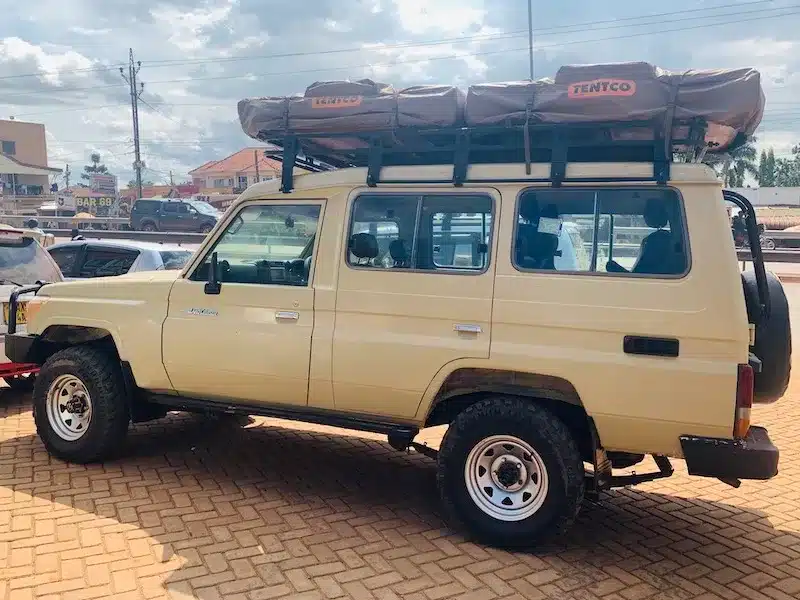
The Extended safari Land Cruise with a rooftop tent available for hire at GoFurther 4×4 Uganda Car Rental
A rooftop tent gives you a different way to experience Uganda. Your vehicle and sleeping accommodation travel together, allowing you to move between destinations without constantly arranging hotels or carrying a conventional tent.
It is particularly appealing if you want to:
- Explore Uganda by road
- Spend nights close to nature
- Visit several national parks
- Enjoy a flexible self-drive itinerary
- Reduce dependence on lodge accommodation
- Experience camping without sleeping directly on the ground
- Combine wildlife viewing with outdoor travel
- Take a longer road trip across Uganda
Most importantly, rooftop camping gives you the freedom to make the journey part of the experience.