This 8-day Uganda safari takes you deep into the country’s southwestern highlands, one of the most scenic regions of Uganda. The journey combines gorilla trekking in Bwindi Impenetrable National Park, wildlife viewing in Queen Elizabeth National Park, relaxing around Lake Bunyonyi and cultural experiences with communities living among the hills.
Unlike an itinerary that tries to cover many parts of Uganda, this route allows you to spend more time in the southwest. You will experience Uganda’s savannah, tropical forests, volcanic highlands, crater lakes and terraced hillsides while travelling at a comfortable pace.
The highlight is undoubtedly the gorilla trekking experience in Bwindi, but the journey around it is just as important. This safari offers a deeper experience of southwestern Uganda.
Day 1: Arrival in Entebbe
Our driver will pick you up from Entebbe International Airport to your hotel in Entebbe or Kampala. After an international flight, we recommend keeping the first day relaxed. Entebbe is a pleasant place to recover from your journey because it sits on the shores of Lake Victoria and has a much quieter atmosphere than Kampala.
Depending on your time of arrival, you can visit the Entebbe Botanical Gardens, where you can walk through different vegetation zones and look for monkeys and birds. You can also visit the lakeshore or explore some of the town’s restaurants and local markets.
If you prefer to rest, you can simply enjoy your hotel and prepare for the long journey to southwestern Uganda the following morning. In the evening, our driver-guide will brief you about the safari, including the route, activities and what to expect during gorilla trekking.
You can also enjoy your first Ugandan meal. Depending on your preference, you may try matooke, groundnut sauce, beef stew, beans, grilled tilapia or a Ugandan rolex.
Accommodation: Budget guesthouse, mid-range hotel or luxury hotel.
Day 2: Entebbe/Kampala to Queen Elizabeth National Park
After breakfast, our driver-guide will pick you up and we will begin our long 7-9 hours journey towards our western Uganda safari. The drive takes us through central Uganda and gradually into the greener landscapes of western Uganda. Along the way, you will see farmland, roadside markets, small towns and rural communities.
We can make stops for refreshments, photographs and lunch along the way.
As we approach Queen Elizabeth National Park, the scenery becomes more dramatic. You may begin to see the Rwenzori Mountains in the distance when weather conditions provide clear views.
Queen Elizabeth National Park is one of Uganda’s most diverse wildlife destinations. It contains extensive savannah plains, wetlands, forests, lakes and volcanic landscapes. The park is home to elephants, buffaloes, Uganda kob, warthogs, hippos and numerous other animals. Lions are also present, and the southern Ishasha sector is famous for its tree-climbing lions.
The park is also known for the Kazinga Channel, a natural waterway connecting Lake Edward and Lake George. The channel attracts large numbers of hippos, elephants, buffaloes and water birds.
After arriving, we check into our lodge. If we arrive early enough, we can take a short evening game drive. Otherwise, you can relax at the lodge and enjoy views of the surrounding landscape.
Accommodation: Budget safari lodge/campsite, mid-range safari lodge or luxury lodge.
Day 3: Queen Elizabeth Wildlife Safari and Kazinga Channel Cruise

We start the morning with an early game drive through the park. The morning is one of the best times to explore Queen Elizabeth because temperatures are cooler and many animals are still active.
Our driver-guide will take you through the open savannah in search of elephants, buffaloes, Uganda kob, waterbuck, warthogs and other wildlife.
The Kasenyi Plains are particularly well known for their wildlife and are an important habitat for Uganda kob. Where prey is abundant, predators such as lions may also be nearby.
We will take our time rather than rushing through the park. Wildlife viewing is about patience, and sometimes the most memorable moments come from simply sitting quietly and watching animals behave naturally.
After the game drive, we return to the lodge for lunch.
In the afternoon, we head to the Kazinga Channel for a boat cruise. After the cruise, we return to the lodge for dinner and relaxation.
Accommodation: Same as Day 2.
Day 4: Queen Elizabeth to Bwindi through the Ishasha sector
After breakfast, we leave Queen Elizabeth National Park and travel southwards towards Bwindi.
Where road and park conditions allow, we take the route through the Ishasha sector, one of the most interesting parts of Queen Elizabeth National Park.
Ishasha is famous for its tree-climbing lions. These lions are often seen resting on the branches of large fig and acacia trees. Seeing them is never guaranteed, because they are wild animals and move freely through the park. However, our driver-guide will keep an eye on the trees and areas where lions are commonly encountered. Ishasha also supports elephants, buffaloes, topi, hippos and other wildlife.
After leaving the park, the landscape changes again as we climb towards the highlands of southwestern Uganda. The journey to Bwindi is visually spectacular. Rolling hills rise into the distance, with cultivated slopes and small villages spread across the landscape.
The region is sometimes called the “Switzerland of Uganda” because of its green hills and mountainous scenery. As we approach Bwindi, the thick forest becomes more prominent.
Bwindi is one of the world’s most important habitats for mountain gorillas. The forest covers steep mountainous terrain and contains an extraordinary variety of plants, birds, insects and mammals.
For many travellers, simply entering the Bwindi forest is an experience. The vegetation is dense, the terrain can be challenging and the atmosphere feels completely different from the savannah parks.
When we arrive, we check into our lodge and prepare for the following day’s gorilla trekking. It is important to have a good night’s rest because the trek can involve several hours of walking.
Accommodation: Budget lodge/campsite, mid-range lodge or luxury lodge near your gorilla trekking sector.
Day 5: Gorilla trekking in Bwindi
Today is the main highlight of the safari. After an early breakfast, our driver-guide will take you to the relevant gorilla trekking briefing point according to the location of your permit.
Before entering the forest, Uganda Wildlife Authority guides and rangers will brief you about trekking procedures, safety and responsible gorilla viewing.
You then begin your trek into Bwindi. Gorilla trekking is not a traditional safari where you sit in a vehicle and drive through open grassland. You walk through dense forest and steep terrain while trackers search for the gorilla family allocated to your group.
The duration of the trek varies considerably. Some groups can be reached within a relatively short walk, while others may require several hours of hiking.
The terrain can also be challenging, particularly after rain. When you finally encounter the gorillas, the effort becomes worthwhile.
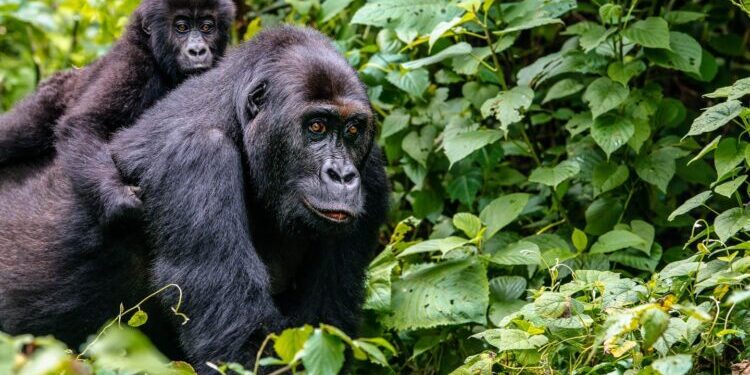
You may see them feeding, resting, mating, grooming, climbing or interacting with one another. Young gorillas can be particularly entertaining as they move around the group under the watch of adults.
Your ranger will guide you on how to behave around the gorillas and maintain the required distance. After the experience, we return from the forest and meet our driver.
Depending on your energy levels, the remainder of the day can be spent relaxing at the lodge. For travellers interested in local culture, we can arrange a community experience with the communities later in the afternoon.
The areas surrounding Bwindi are home to communities with strong agricultural traditions. The Bakiga are one of the major communities in the region, while cultural experiences can also introduce visitors to the history and traditions of the Batwa people, who have a long historical connection with the forest.
Community tourism can include traditional dance, storytelling, crafts, food preparation and demonstrations of everyday activities. These experiences are particularly meaningful when they are organised through community initiatives that allow local people to benefit directly from tourism.
Accommodation: Same as Day 4.
Day 6: Bwindi to Lake Bunyonyi
After breakfast, we leave Bwindi and travel towards Lake Bunyonyi.
The drive may be relatively short, but the scenery makes it one of the most enjoyable journeys of the safari. The roads wind through the hills, passing cultivated slopes, small villages and viewpoints overlooking valleys.
Lake Bunyonyi is one of Uganda’s most scenic lakes and is surrounded by steep green hills. The lake is dotted with numerous small islands, each with its own landscape and history. Its peaceful setting makes it a popular place for travellers to relax after gorilla trekking.
The name Bunyonyi is commonly associated with “little birds”, and the area is known for its birdlife.
Once we arrive, you can check into your accommodation and enjoy a slower afternoon. Depending on your interests, you can take a canoe or boat trip on the lake, visit some of the islands or simply relax by the water.
The hills around Bunyonyi are heavily cultivated. You will notice terraces and gardens covering many of the slopes, showing how local communities have adapted agriculture to the steep terrain. The evening is best spent enjoying the peaceful atmosphere of the lake.
Accommodation: Budget lakeside guesthouse, mid-range lodge or luxury lakeside resort.
Day 7: Explore Lake Bunyonyi
This day gives you time to properly experience Lake Bunyonyi rather than simply passing through it. After breakfast, we take a boat or traditional-style canoe onto the lake.
From the water, the surrounding landscape becomes even more impressive. Green hills rise around the lake, while small islands appear between the channels.
Depending on the route and your interests, you can visit some of the islands and learn about the communities that live around the lake.
The communities around the lake depend heavily on agriculture, fishing and small-scale trade. The steep hills make farming challenging, yet generations of farmers have developed ways of cultivating the land.
You may see gardens growing crops such as bananas, vegetables, beans and other food crops. A community experience can also introduce you to local crafts and food preparation.
For travellers interested in photography, the area provides excellent opportunities to capture landscapes and everyday rural life. As always, we encourage responsible photography by asking permission before photographing people. After the boat experience, you can spend the afternoon relaxing at the lodge.
You may also choose to swim where your accommodation has a designated safe swimming area, enjoy a nature walk or simply sit overlooking the lake.
After several active days, this slower day allows you to appreciate another side of Uganda.
Accommodation: Same as Day 6.
Day 8: Lake Bunyonyi to Entebbe
After breakfast, our driver will pick you up and we begin the long 8-10 hour journey back towards Entebbe. We leave early because this is one of the longest driving days of the itinerary.
The journey takes us through the Ugandan countryside, passing farming communities, towns and roadside markets. We will make stops along the way for lunch, refreshments and photographs.
As we approach central Uganda, the landscape gradually becomes busier, with increased traffic and urban development. If your international flight is scheduled for the same evening, we recommend allowing plenty of time between the estimated arrival in Entebbe and your flight. An additional night in Entebbe can be arranged if you prefer a more relaxed end to the safari.
Our driver will drop you at Entebbe International Airport or at your hotel.
Your southwestern Uganda adventure comes to an end.