A 4×4 Uganda family safari can become one of the most rewarding holidays you will ever take. Imagine children watching elephants cross a dusty track, parents enjoying spectacular views of the Rwenzori Mountains, and the entire family gathering around a campfire after a day exploring the African wilderness.
Planning a family holiday in Africa is exciting, but choosing the right destination, accommodation and transport can sometimes feel overwhelming. Uganda makes an excellent destination for families looking for something beyond conventional beach holidays and city breaks. Its diverse landscapes, welcoming communities, incredible wildlife and outdoor adventures offer experiences that appeal to different generations.
A well-planned 4×4 Uganda family vacation allows you to discover the country with greater flexibility. You can spend a morning watching elephants in Queen Elizabeth National Park, enjoy an afternoon boat cruise along the Kazinga Channel and finish the day relaxing at a family-friendly lodge overlooking the wilderness.
Unlike conventional group tours, travelling in a private 4×4 gives your family greater control over departure times, sightseeing stops, meal breaks and daily activities.
Nevertheless, Uganda is a destination where distances, road conditions and activity requirements deserve careful consideration. Families travelling with young children especially need to balance adventure with comfort.
This guide takes you through everything you need to organise a memorable 4×4 family vacation in Uganda.
Start planning your family vacation around the children’s ages

Before choosing destinations or booking a 4×4 vehicle, consider the ages of everyone travelling. A holiday involving toddlers will look considerably different from one involving teenagers or young adults. The children’s ages influence the activities they can participate in, the accommodation you choose and the amount of time you can comfortably spend travelling.
Families with younger children should prioritise destinations with shorter driving distances, comfortable accommodation and activities that do not require strenuous physical effort.
Lake Mburo National Park, for example, offers excellent opportunities for families. It’s relatively accessible location makes it a convenient addition to a western Uganda road trip. Children can enjoy wildlife viewing, guided nature walks where age requirements permit, and boat excursions.
Families with older children have more opportunities to explore Uganda’s adventurous side. They can consider chimpanzee trekking, white-water rafting, mountain adventures and longer wildlife safaris, subject to individual activity requirements.
Teenagers may particularly enjoy combining traditional game drives with cultural encounters, cycling experiences and outdoor adventures.
For multigenerational families travelling with grandparents, parents and children, comfort should take priority. Choose accommodation with suitable room arrangements and avoid consecutive days involving long drives.
The secret is creating an itinerary that accommodates everyone’s interests without making the holiday exhausting.
Choose the best time for a 4×4 family vacation in Uganda
Uganda is an all-year-round destination. However, different seasons influence road conditions, wildlife viewing, accommodation availability and outdoor activities.
The country generally experiences two drier periods and two rainy periods. The first dry season runs approximately from December to February. The second usually occurs between June and September.
These months are popular for family safaris because many roads and tracks within national parks are easier to navigate. Wildlife viewing can also become rewarding as animals gather around available water sources.
The wetter periods generally occur between March and May and October and November. Although rainfall can make some roads muddy, these months offer beautiful green landscapes. They can also provide opportunities for travellers seeking quieter destinations and potentially more accommodation options.
Families travelling during school holidays should book accommodation and safari activities early. Popular lodges around Bwindi, Kibale, Murchison Falls and Queen Elizabeth National Parks can fill up quickly.
Remember that Uganda’s tropical climate does not follow a perfectly predictable calendar. Rain can occur during traditionally dry months. A capable 4×4 vehicle is therefore particularly important when travelling with children.
Select family-friendly destinations across Uganda
Uganda offers an impressive selection of destinations that can accommodate different family interests.
However, you should resist the temptation to visit every national park during one holiday. A better approach is selecting destinations that complement each other while allowing enough time to enjoy each experience.
Murchison Falls National Park is one of the best destinations to introduce children to Uganda’s wildlife. The park offers spectacular savannah landscapes, elephants, giraffes, buffaloes, antelopes and numerous bird species. Families can enjoy morning and afternoon game drives while looking for wildlife across the open plains. A boat cruise along the Victoria Nile is another highlight. Children can observe hippos, crocodiles and elephants gathering along the riverbanks.
For families, Murchison offers a combination of wildlife viewing, scenic experiences and relatively accessible outdoor activities.
Queen Elizabeth National Park is another excellent addition to a family safari. Its varied ecosystems include open savannah, wetlands, forests and crater lakes. Families can enjoy game drives in the Kasenyi Plains, where lions, elephants, buffaloes and several antelope species can be spotted.
The Kazinga Channel boat cruise is particularly rewarding. It provides an opportunity to observe large concentrations of hippos, crocodiles and waterbirds. The Ishasha sector is famous for its tree-climbing lions, although sightings are never guaranteed.
Families can also explore nearby communities and learn about traditional livelihoods, local food and cultural practices.
Another convenient park to consider is Lake Mburo National Park. It is particularly convenient for families travelling between Kampala and western Uganda. It offers a more compact safari experience compared with some of Uganda’s larger parks. Wildlife includes zebras, impalas, giraffes, buffaloes and several other species.
Boat trips on Lake Mburo provide another perspective of the park. Families can also enjoy guided nature experiences and scenic countryside drives. Its accessibility makes it a useful destination for families who do not want to spend too many consecutive hours travelling.
kibale Forest NP may be an option for families interested in primates. The forest is famous for Ch and its remarkable biodiversity.
Chimpanzee trekking is an exciting experience, although it involves walking through natural forest terrain. Children must meet the applicable minimum age requirement, which should be confirmed when booking. Families travelling with younger children can consider other forest experiences and community activities around Fort Portal.
The nearby crater lakes, tea plantations and cultural attractions provide excellent opportunities for relaxed sightseeing.
Choose the right 4×4 vehicle for your family

Vehicle selection is one of the most important decisions when organising a 4×4 Uganda family vacation. Uganda’s road network includes modern highways, gravel roads, rough countryside tracks and challenging sections within national parks.
A suitable 4×4 vehicle provides better ground clearance, traction and comfort when navigating different road conditions. However, not every 4×4 is suitable for every family.
Consider the Land Cruiser Prado, Toyota Land Cruiser Hardtop, Toyota Land Cruiser with a Pop-Up Roof and Toyota Hiace 4×4
Important to consider is child seats before confirming your vehicle. Families travelling with babies and younger children should arrange appropriate child restraints. Do not assume that every rental vehicle automatically comes with infant seats or booster seats.
Inform your rental company about the children’s ages, weights and heights before confirming the booking. Ask whether suitable seats are available and whether they can be installed correctly.
Also consider the number of passenger seats and seatbelts, luggage capacity, air conditioning, availability of charging ports, space for strollers and children’s equipment, vehicle maintenance history, spare tyres and emergency equipment and insurance coverage and roadside assistance.
A vehicle that accommodates five passengers on paper may become uncomfortable when everyone carries large suitcases. Always prioritise passenger comfort over simply choosing the cheapest rental option.
Decide between self-drive and hiring a 4×4 with a driver
One of the biggest decisions when planning a family road trip is determining who will drive. Both self-drive and chauffeur-driven holidays have advantages. Self-drive offers independence and flexibility. Parents can decide when to leave, where to stop and how long to spend at different attractions. It is particularly attractive to families who enjoy road trips and want to experience Uganda beyond conventional guided safaris.
However, driving in Uganda requires preparation. You need to understand local traffic behaviour, road signs, speed limits, parking arrangements and driving conditions.
Some journeys involve long distances, unpredictable traffic and challenging rural roads. If you are unfamiliar with Uganda, driving through busy Kampala traffic or navigating unfamiliar roads after dark can become stressful.
Families choosing self-drive should also understand the rental agreement, insurance coverage, vehicle recovery arrangements and restrictions on travelling outside approved areas.
Hiring a 4×4 with a professional driver offers a more relaxed experience. Parents can concentrate on their children and enjoy the scenery instead of worrying about navigation and road conditions.
An experienced driver familiar with Uganda’s tourism routes can also recommend convenient stops, local restaurants and interesting attractions.
If you are visiting several national parks, consider hiring a driver-guide who understands wildlife viewing and safari operations. This arrangement is particularly useful for families travelling with younger children.
You can enjoy the holiday without having to manage every aspect of the journey yourself. Ultimately, your decision should depend on your driving experience, budget, preferred travel style and itinerary.
Create a realistic family safari itinerary

A successful family vacation should not feel like a race between national parks. One of the biggest mistakes travellers make is including too many destinations in a limited number of days.
Uganda’s attractions are spread across different regions. Some journeys take several hours, even when the distance appears relatively short on a map. Children also need regular breaks, meals and opportunities to relax.
Here are some of the itineraries most suitable for family vacations.
6 Days Chimpanzee and Gorilla Trekking Adventures
5 days self-dive adventure safari to Jinja and Sipi Falls
8 DAYS GORILLA AND SOUTH-WESTERN HIGHLANDS UGANDA SAFARI
10 Days Classic wildlife and Uganda gorilla Safari with a driver
7 Days Murchison Falls and Northern Uganda Safari
5 Days self-drive adventure safari to Jinja and Sipi Falls
Choose the right accommodation
Accommodation can significantly influence the quality of your family holiday. Uganda offers everything from budget guesthouses and campsites to luxury safari lodges.
However, families should look beyond beautiful photographs when selecting accommodation.
Consider whether the property provides family rooms, interconnecting rooms, swimming pools, child-friendly rooms, laundry services, reliable electricity, hot water, and secure surroundings.
Some safari lodges are situated in wildlife areas without conventional fencing. Parents must follow lodge instructions and ensure children do not walk around independently. Booking accommodation close to your planned activities can also reduce unnecessary driving.
Understand the costs of a 4×4 family vacation in Uganda
Budgeting is an essential part of organising a successful family safari. The total cost depends on the number of travellers, length of stay, accommodation standards, vehicle choice and activities.
Your budget should account for more than the cost of renting a 4×4. Car rental prices depend on the vehicle model, rental duration, season and whether you choose self-drive or a vehicle with a driver.
Ask whether the quotation includes mileage, insurance, roadside assistance and cross-border permissions if applicable. Also clarify whether fuel is included.
Fuel is also an important consideration when travelling long distances. Uganda’s safari destinations are spread across different regions, and some itineraries involve substantial driving. Calculate your estimated mileage before departure and include a reasonable contingency for detours and additional sightseeing.
Choose accommodation according to your family’s comfort requirements. Budget guesthouses may work well for families seeking affordable accommodation. Midrange lodges often provide a good balance between comfort and cost. Luxury safari lodges offer additional facilities and personalised services. Remember that family rooms can sometimes offer better value than booking multiple individual rooms.
Other expenses to consider:
- Parks and activities
- Meals and personal expenses
- Emergency funfs
- Tips
- Shopping
- Donations
Prepare travel documents and entry requirements

International families visiting Uganda should organise their travel documents well before departure. Every traveller, including children, should have an appropriate passport and satisfy Uganda’s entry requirements.
Check passport validity requirements before travelling. Most international visitors require a visa unless they qualify for an exemption. Uganda operates an online visa application system through its official immigration authorities. Apply through the official government website rather than relying on unofficial agents.
Yellow fever vaccination certification is an important entry consideration for international travellers. Check the latest requirements for your nationality, departure country and travel history.
Families travelling with children should also consider additional documentation. Depending on the circumstances, immigration or airline officials may request evidence of parental consent when a child travels with only one parent or another accompanying adult.
Carry copies of passports and visas, flight reservations, accommodation confirmations, travel insurance documents, children’s vaccination records, parental consent documentation where applicable as well as safari and vehicle rental confirmations.
You may also keep digital copies securely accessible and carry physical copies of essential documents.
Prioritise children’s health and safety
Health preparation should never be an afterthought when organising a family safari. Uganda is a tropical destination, so families should seek professional travel health advice before departure.
Consult a travel health clinic several weeks before travelling. Discuss recommended vaccinations, malaria prevention and any specific health considerations affecting your children. Malaria is present in Uganda, making prevention particularly important.
Follow medical advice on appropriate antimalarial medication, insect repellents and protective clothing.
Pack a family first-aid kit containing essential items such as child-appropriate pain and fever medication, antiseptic wipes, and adhesive bandages, among others.
Bring enough prescription medication for the entire holiday. Parents should also identify medical facilities along their planned route.
Travel insurance should cover the activities included in your itinerary. Check whether it covers emergency medical treatment, evacuation and adventure activities.
During the safari, keep children hydrated and protect them from excessive sun exposure. Do not allow children to approach wild animals, feed wildlife or leave the vehicle in restricted areas.
National parks are natural environments, not conventional zoos. Always follow your guide’s instructions.
Plan meals, snacks and rest stops
Food is an important consideration when travelling with children. Although many Ugandan lodges offer international dishes, families should communicate their dietary requirements before arrival.
Ugandan cuisine includes matooke, rice, potatoes, groundnut sauce, beans, grilled meat and several traditional vegetable dishes. Many children will enjoy familiar foods such as chips, chicken, rice and fresh fruit.
However, families with picky eaters should carry a few familiar snacks. Useful options include biscuits, cereal bars, dried fruit and other non-perishable foods.
Always carry sufficient drinking water during road transfers. Avoid relying entirely on roadside restaurants, especially when travelling with younger children. Plan your meal stops in advance and allow enough time for bathroom breaks.
A comfortable family safari should not involve children spending the entire day inside a vehicle without opportunities to stretch and move around.
Understand road conditions and driving safety in Uganda
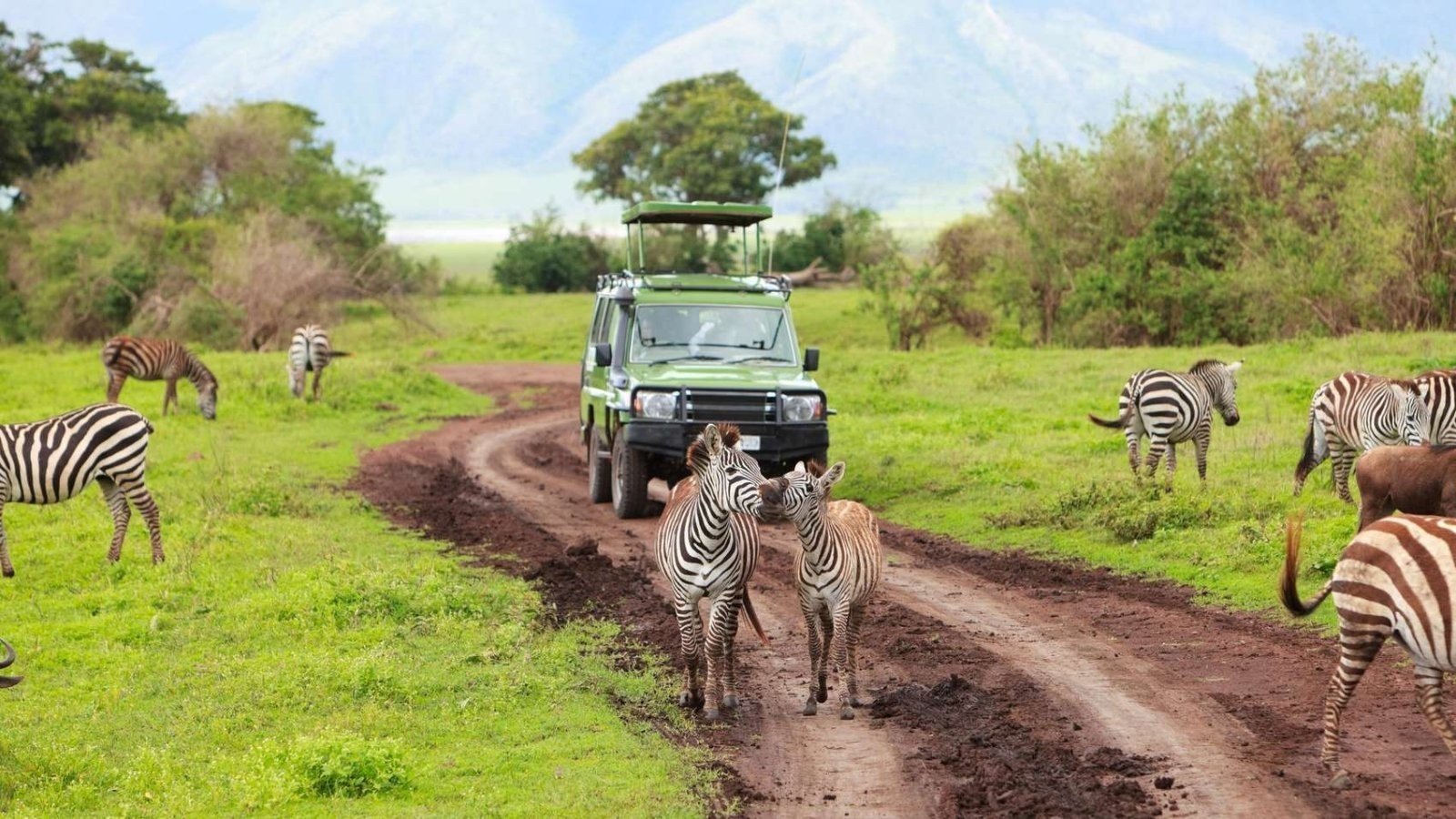
Uganda offers some beautiful road-trip experiences, but driving conditions vary considerably. Major highways connecting Kampala, Entebbe and several regional towns are generally more developed than many rural roads.
However, traffic congestion, road construction, potholes, livestock and unpredictable driving behaviour can affect journey times. Inside national parks, you may encounter loose gravel, muddy tracks, steep sections and uneven terrain.
This is why choosing a suitable 4×4 Uganda rental vehicle is important. Families choosing self-drive should understand Uganda’s traffic regulations before starting their journey.
Drive on the left-hand side of the road and observe posted speed limits. Avoid driving at night whenever possible. Night driving increases the risk of encountering poorly lit roads, pedestrians, cyclists, livestock and unexpected obstacles.
Always wear seatbelts. Children should use appropriate child restraints, and luggage should be secured properly. Never allow children to stand through a vehicle’s open roof while it is moving.
When entering national parks, follow designated tracks and respect wildlife viewing regulations. A capable vehicle is important, but responsible driving is equally essential.
Final thoughts
Uganda offers families an extraordinary combination of wildlife, landscapes, culture and outdoor adventure. Every destination offers something different. The secret to a successful family holiday is balancing adventure with comfort.
Choose destinations carefully, book suitable accommodation, prepare the necessary travel documents and select a reliable 4×4 vehicle.
Most importantly, remember that travelling with children requires patience and flexibility. Allow enough time for everyone to enjoy the experience rather than rushing between destinations.
With the right preparation, a 4×4 family vacation in Uganda can become an unforgettable journey filled with discovery, laughter and experiences your children will remember for years.
At GoFurther 4×4 Car Rentals, we understand that families need more than just transportation. They need comfortable, reliable vehicles suitable for Uganda’s diverse road conditions and safari destinations. We offer 4×4 rental options for families interested in exploring Uganda through self-drive adventures or chauffeur-driven holidays.