
AFCON 2027 will bring football supporters to Uganda, Kenya, and Tanzania, creating an opportunity to explore East Africa beyond the stadiums. But with matches, national parks, cultural attractions, and major cities spread across three countries, how travellers move around the region could shape their entire experience. Cross-border car rental, private transfers, and carefully planned road trips offer different ways to discover East Africa during the tournament.
Imagine arriving in Kampala to watch your national team compete at AFCON 2027. The stadium is packed, supporters are singing, and the streets are alive with football conversations. But your East African adventure does not have to end when the referee blows the final whistle.
A few days later, you could be exploring Nairobi, discovering the beaches of Tanzania, or travelling through Uganda’s countryside towards a national park. For visitors with enough time, the tournament presents an opportunity to combine football with wildlife safaris, cultural experiences, and road trips across national borders.
Uganda, Kenya, and Tanzania will jointly host the 2027 Africa Cup of Nations, placing three neighbouring countries at the centre of African football. For international visitors, this creates an unusual travel opportunity: experience a major football tournament while discovering some of East Africa’s most remarkable destinations.
However, travelling between host countries requires more planning than simply buying match tickets and booking accommodation. Visitors must consider border requirements, driving distances, vehicle permissions, insurance, road conditions, and the time needed to move between cities.
Cross-border travel is therefore one of the most important considerations for football fans hoping to experience more than one East African country during AFCON 2027.
For travellers who value flexibility, GoFurther 4×4 Car Rental offers an option worth considering: arranging a vehicle for a journey that extends beyond Uganda’s borders.
AFCON 2027 puts East Africa on one football travel map

The Talanta Sports Stadium in Kenya is one of the stadiums confirmed to host AFCON 2027
The 2027 Africa Cup of Nations will be jointly hosted by Uganda, Kenya, and Tanzania. The tournament is expected to attract supporters, football officials, journalists, and other visitors from across Africa and beyond.
For many travellers, following the tournament could involve more than one destination.
A supporter might arrive in Uganda, attend a match, and then travel to Kenya for another fixture. Another visitor might choose Tanzania as a holiday extension, combining football with wildlife experiences or time on the coast.
The possibilities extend beyond match attendance. International visitors may want to experience Kampala’s restaurants and cultural attractions, explore Nairobi’s urban energy, visit Tanzania’s wildlife destinations, or discover the region’s varied landscapes.
Yet the practicalities of regional travel matter.
The final tournament schedule, confirmed match venues, and the distance between a visitor’s chosen destinations will determine which journeys are realistic. Some travellers will find domestic flights more convenient, while others may prefer a road trip that allows them to explore places along the way.
This is where planning becomes essential.
Instead of treating Uganda, Kenya, and Tanzania as three separate destinations, visitors can consider how the countries might fit into one carefully organised East African holiday.
Getting around Uganda during AFCON 2027
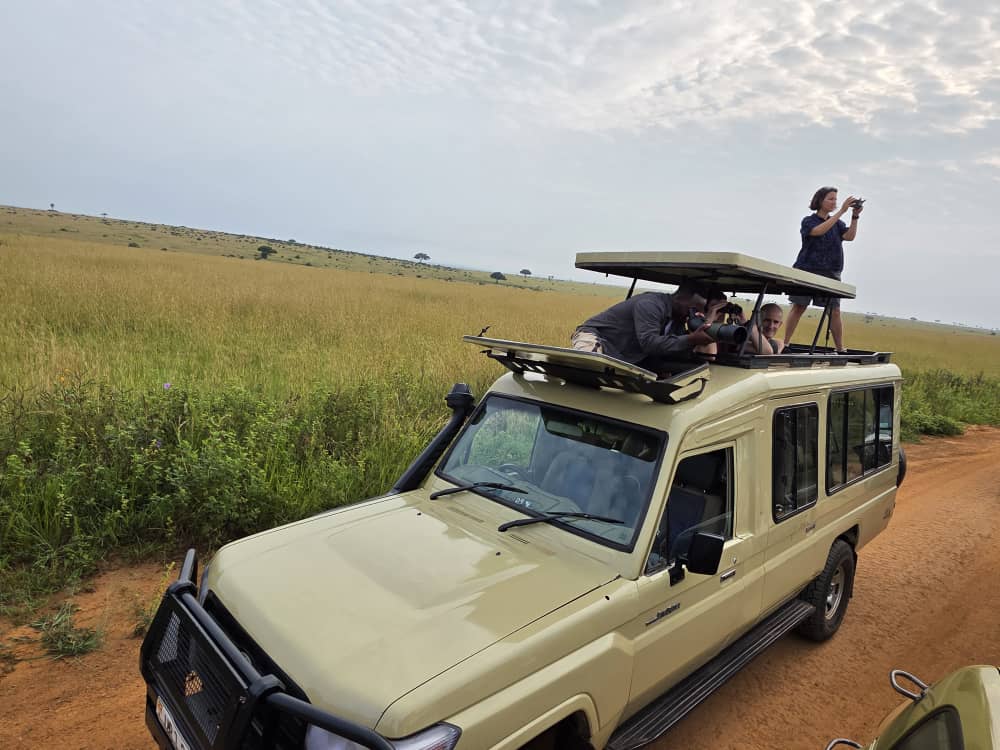
A pop-up roof is perfect for photography because it gives clear views of the surroundings. An ideal vehicle to move around East Africa during AFCON
For visitors attending matches in Uganda, understanding local transport options will be essential. Kampala is a busy city, and journey times can vary considerably depending on traffic, weather, roadworks, and the time of day. Travellers should allow additional time when moving between their accommodation, the airport, restaurants, and stadiums.
The most suitable transport option depends on the visitor’s budget, itinerary, and familiarity with Uganda.
Airport transfers for international arrivals
Entebbe International Airport is Uganda’s principal international gateway. Travellers arriving for AFCON 2027 will need to arrange transportation to their accommodation and any subsequent destinations.
Airport transfers can be particularly useful for visitors arriving late at night, travelling with families, or carrying substantial luggage.
A pre-arranged private transfer allows travellers to organise their arrival in advance rather than negotiating transport after a long international flight.
Visitors should confirm the pickup location, vehicle type, luggage capacity, price, and contact details before travelling. For those planning a longer Uganda holiday, an airport transfer can also be the starting point for a wider itinerary.
Car rental for exploring Uganda independently
Car rental may suit visitors who want to explore Uganda beyond the main tournament locations. With a rental vehicle, travellers can organise their own schedules, visit attractions at their preferred pace, and spend more time in destinations that interest them.
A standard vehicle may be suitable for many journeys on paved roads, depending on conditions and the planned route. Travellers visiting national parks, remote areas, or destinations with challenging road conditions may prefer a suitable 4×4.
Visitors should consider their driving experience, the local driving environment, insurance cover, and the type of roads they intend to use before choosing a vehicle.
International travellers who are unfamiliar with driving in Uganda may find a vehicle with a professional driver more comfortable.
Private drivers and chauffeur services
Not every visitor wants the responsibility of driving in an unfamiliar country. A car rental with a driver can help travellers move between destinations while allowing them to focus on the tournament and their holiday.
This option may be particularly useful for families, groups of supporters, business travellers, and visitors planning excursions outside Kampala.
A driver can also help with route planning and local navigation. However, travellers should agree on the itinerary, waiting times, overnight arrangements, and any additional charges before departure.
For visitors who intend to cross into another country, the vehicle and driver arrangements must also comply with the relevant border and transport requirements.
Cross-border car rental could give AFCON visitors more freedom
For travellers who want to experience Uganda, Kenya, and Tanzania during the same holiday, cross-border car rental deserves particular attention. Rather than arranging separate vehicles in each country, eligible travellers may be able to organise a rental vehicle authorised for international travel across specified borders.
This can make a multi-country itinerary more convenient, especially when the journey includes several destinations or when travellers prefer road travel to flying between cities.
Travellers opting for self-drive across borders should obtain written confirmation that their rental vehicle is authorised to enter each intended country.
They should also establish whether the vehicle must be returned to its original collection point or whether a different return location is permitted. These details can significantly affect the cost and feasibility of a regional road trip.
For AFCON 2027 visitors, the best approach is to choose a route first, then arrange a vehicle and rental agreement that specifically support that journey.
Explore East Africa beyond borders with GoFurther 4×4 Car Rental

Snow-capped Mount Kilimanjaro rising above the African landscape in Tanzania.
For visitors who want to combine football with an East African road trip, GoFurther 4×4 Car Rental offers a potential starting point for planning a journey from Uganda into neighbouring countries. We provide car rental services in Uganda, including options for travellers interested in self-drive trips, vehicles with drivers, and cross-border journeys.
This makes cross-border travel particularly relevant for visitors who intend to use Uganda as the starting point for a broader regional holiday.
For example, an international visitor could arrange a vehicle in Uganda, explore selected destinations, and continue into another country if the rental agreement, insurance, and border documentation permit the journey.
A group of football supporters might prefer a vehicle with enough seating and luggage capacity for everyone. A couple planning a wildlife-focused holiday might choose a suitable 4×4 for their itinerary. Visitors who would rather concentrate on sightseeing could enquire about a vehicle with a professional driver.
The important consideration is matching the vehicle and rental arrangement to the trip.
Before departure, travellers should confirm which countries are authorised, whether additional border charges apply, what insurance cover is valid abroad, and where the vehicle must be returned.
They should also request the required vehicle documents and any written authorisation needed for border officials.
Travellers planning such a journey can visit GoFurther 4×4 Car Rental to explore available rental options and enquire about cross-border travel arrangements.
Travelling from Uganda to Kenya during AFCON 2027
Uganda and Kenya share a border and maintain important road connections between their major towns and cities. For football supporters, travelling between the two countries could form part of a regional tournament itinerary, depending on the confirmed match schedule.
The journey may also appeal to visitors who want to combine Uganda’s wildlife and cultural attractions with experiences in Kenya.
Travellers can explore options involving Kampala, Jinja, and the Kenyan cities of Busia or Malaba before continuing towards destinations such as Nairobi. The most appropriate route depends on the starting point, destination, border conditions, and current road information.
However, visitors should not assume that crossing the border will be instantaneous.
Immigration procedures, vehicle inspections, queues, and other formalities can affect journey times. Travellers should allow sufficient time and avoid scheduling important activities immediately after an uncertain border crossing.
Documents needed for a Uganda–Kenya road trip
International visitors must satisfy the applicable entry requirements for Kenya and Uganda. Depending on nationality and circumstances, this may include a valid passport, the required visa (Pamoja Tourist Visa) or electronic travel authorisation, and other supporting documents.
Travellers should verify current entry requirements through official immigration sources before departure. Those using a rental vehicle should also obtain the documents required for the vehicle to cross the border. These may include the rental agreement, written permission from the rental company, vehicle registration documentation, and evidence of valid insurance, especially self-drive travelers.
Additional requirements may apply depending on the vehicle, nationality, and route. Visitors should confirm the applicable requirements with the rental company and relevant authorities rather than relying on assumptions based on previous trips.
Is it better to drive or fly between Uganda and Kenya?
The choice depends on the purpose of the trip. Flying may be more convenient for visitors travelling directly between major cities, particularly when time is limited or match schedules are close together.
Driving may be more appealing to travellers who want flexibility, prefer a road trip, or intend to explore destinations along the route.
However, road travel involves border procedures, variable journey times, fuel costs, and possible overnight stops. A road trip should therefore be planned around realistic driving times rather than straight-line distances.
For visitors attending several matches in different countries, the final tournament schedule should guide the decision.
Travelling from Uganda to Tanzania
Tanzania offers another opportunity for visitors who want to extend their AFCON holiday. The country is known for its wildlife destinations, mountain landscapes, Indian Ocean coastline, and islands, including Zanzibar.
A traveller who has attended matches in Uganda might want to continue to Tanzania for a safari or a few days by the coast. Others may prefer to explore the country as part of a longer East African journey.
Road travel between Uganda and Tanzania is possible, but the feasibility depends on the chosen route, destination, border crossing, and available time.
Travellers should research the journey carefully before deciding to drive.
A trip to a nearby border town is very different from continuing to Dar es Salaam, Arusha, or another distant destination. Some journeys may be better completed by air, especially when the visitor has only a short gap between matches.
Uganda, Kenya and Tanzania: One regional holiday, three different experiences
AFCON 2027 could encourage some supporters to explore all three host countries, but a multi-country trip requires more preparation than a single-destination holiday.
Each country offers different experiences, and the best route depends on the visitor’s interests. Uganda is known for mountain gorillas, chimpanzees, diverse national parks, the Nile, and its rich cultural heritage.
Kenya offers renowned wildlife destinations, varied landscapes, coastal attractions, and vibrant urban experiences. Tanzania is known for its major safari destinations, Mount Kilimanjaro, and its Indian Ocean islands.
Visitors can build an itinerary around football, wildlife, culture, adventure, or relaxation. For example, someone interested in wildlife might choose a focused safari in one country and add a shorter experience in another. A traveller prioritising football could instead concentrate on confirmed match venues and add city excursions around them.
A longer holiday may allow more extensive exploration, but travelling across three countries by road can consume several days.
Self-drive or a vehicle with a driver: Which is better for AFCON visitors?
The right transport option depends on how visitors want to experience East Africa. Self-drive travel can provide flexibility for travellers who are comfortable driving in unfamiliar environments and have sufficient time to plan their routes.
It may suit couples, families, or groups who want to stop at attractions along the way.
However, self-drive visitors must take responsibility for navigation, local driving rules, vehicle care, and border procedures. They should also be prepared for traffic congestion, changing road conditions, and unfamiliar driving environments.
A vehicle with a professional driver offers a different experience. Visitors can focus on sightseeing, rest between destinations, and enjoy the journey without having to drive themselves.
This may be particularly appealing to travellers who have limited time, are unfamiliar with East African roads, or prefer a more relaxed holiday.
For cross-border journeys, travellers should confirm that the driver is authorised and able to accompany them across the relevant borders. They should also agree on the driver’s accommodation, working hours, and any additional costs.
Neither option is universally better. The most suitable choice depends on the traveller’s budget, confidence, itinerary, and preferences.
What international visitors should know before renting a car across East Africa

Nairobi skyline overlooking Nairobi National Park, Kenya
Cross-border travel can be rewarding, but it requires more than choosing a vehicle and setting a destination. Visitors should start by selecting a reputable rental company and asking specific questions about international travel.
A clear rental agreement should identify the permitted countries, rental duration, authorised drivers, insurance arrangements, mileage conditions where applicable, and return requirements.
Travellers should also ask about deposits, cancellation policies, breakdown assistance, accident procedures, and charges that may apply when crossing borders.
It is important to obtain written confirmation of all cross-border permissions before paying or collecting the vehicle.
Visitors should never assume that a rental company will allow a vehicle to enter Kenya or Tanzania simply because the company operates in Uganda.
They should also avoid making payments without reviewing the rental terms and confirming the company’s identity and contact information.
Finally, keep copies of the relevant documents accessible during the journey and follow instructions from immigration and border officials.
Good preparation can make the difference between a smooth regional road trip and a costly interruption.