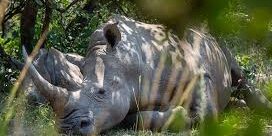
In a historic conservation milestone, Uganda has officially welcomed back rhinos to Kidepo Valley National Park after an absence of more than four decades.
The reintroduction, announced and executed on 17th March 2026, marks the first time since 1983 that rhinos have roamed the park. Conservationists, government officials, and international partners have described the event as a turning point in Uganda’s wildlife recovery journey.
A species lost to history returns

Rhinos once thrived across Uganda, including in Kidepo’s vast savannah landscapes. However, intense poaching and political instability in the 1970s and early 1980s led to their complete disappearance. The last rhino in Kidepo was killed in 1983, marking the species’ extinction in Uganda’s wild.
For 43 years, the park remained without one of Africa’s most iconic animals. That changed last week.
On March 17, two southern white rhinos were successfully translocated into Kidepo from Ziwa Rhino Sanctuary, a privately managed conservation area that has spearheaded rhino breeding in Uganda since 2005.
The animals arrived after a long overland journey of more than 400 kilometers, traveling in specially designed transport crates to ensure their safety.
A carefully planned conservation effort
The reintroduction forms part of Uganda’s broader National Rhino Conservation Strategy, which aims to restore rhino populations to their historical habitats.
The Uganda Wildlife Authority (UWA), the government agency responsible for wildlife conservation, led the initiative in collaboration with partners such as Global Conservation and the Uganda Conservation Foundation.
Dr. James Musinguzi, Executive Director of UWA, presided over the landmark event.
“This moment marks the beginning of a new rhino story for Kidepo Valley National Park,” he said during the official announcement ceremony.
He emphasized that the translocation represents the first phase of a long-term plan to rebuild a sustainable rhino population in the park.
The reintroduction ceremony brought together several key stakeholders in Uganda’s conservation sector.
Among those present or directly involved were representatives from Global Conservation, officials from the Uganda Wildlife Authority, conservation partners, technical teams, wildlife rangers and security personnel
Jeff Morgan, Executive Director of Global Conservation, also praised the initiative, noting that the return of rhinos signals Uganda’s readiness for tourism and conservation growth.
More rhinos on the way
The two rhinos introduced on March 17 are just the beginning. Authorities plan to relocate a total of eight rhinos to Kidepo in carefully managed phases.
Additional rhinos have already begun arriving, with more expected later in 2026. Some of these animals may come from Kenya to diversify the gene pool and strengthen the population’s long-term viability.
The phased approach allows conservation teams to monitor how the animals adapt to their new environment before introducing more individuals.
Preparing Kidepo for rhino survival
Before the rhinos arrived, extensive preparations took place within the park.
A secure sanctuary area was established inside Kidepo, featuring perimeter fencing, ranger outposts, access roads, firebreak systems, water infrastructure as well as monitoring and surveillance systems. These measures aim to protect the animals from poaching and environmental threats.
Experts selected Kidepo after detailed studies confirmed its suitability. The park offers ideal habitat conditions, including open savannah, water sources, and sufficient space for population growth.
A Symbol of Uganda’s stability and recovery
The return of rhinos is not only a conservation success but also a reflection of Uganda’s broader stability.
During the 1970s and 1980s, political unrest created conditions that allowed widespread poaching. Today, improved security and stronger wildlife protection systems have made reintroduction possible.
“This shows that Uganda is stable again for tourism,” said Jeff Morgan.
The move is expected to boost Uganda’s image as a leading eco-tourism destination in Africa.
Ongoing threats and challenges
Despite the success, challenges remain. Poaching continues to pose a significant threat to rhinos across Africa. Rhino horns remain highly valuable on illegal markets, particularly in parts of Asia where they are used in traditional medicine and as status symbols.
Kidepo’s remote location also presents unique risks. The park lies near the border with South Sudan, a region affected by political instability and cross-border cattle rustling.
To address these risks, Uganda has strengthened anti-poaching efforts and increased ranger deployment.
Economic and tourism impact
The return of rhinos is expected to significantly enhance tourism in northeastern Uganda. Kidepo Valley National Park, already known for its rugged beauty and wildlife diversity, will now offer visitors the chance to see the “Big Five” in a more complete form.
Tour operators anticipate increased visitor numbers, which could benefit local communities through job creation and business opportunities.
The reintroduction also aligns with Uganda’s strategy to diversify tourism beyond traditional hotspots like Bwindi and Queen Elizabeth National Park.
The role of Ziwa Rhino Sanctuary
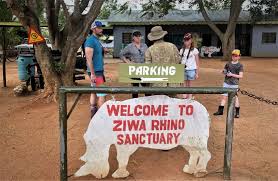
The success of this initiative would not have been possible without the efforts of Ziwa Rhino Sanctuary. Established in 2005, the sanctuary began with just a handful of rhinos imported from Kenya. Over two decades, it has grown the population significantly through careful breeding and protection.
Ziwa now serves as the primary source of rhinos for reintroduction projects across Uganda. Its role highlights the importance of long-term conservation planning and partnerships between private and public sectors.
A new chapter for conservation
The return of rhinos to Kidepo represents more than just a wildlife event. It marks the restoration of a lost ecological balance. Rhinos play a critical role in shaping ecosystems. Their grazing patterns influence vegetation and support biodiversity.
By reintroducing them, Uganda is taking a major step toward restoring natural processes that disappeared decades ago.
Conservationists remain cautiously optimistic about the future. The success of this first phase will determine how quickly additional rhinos are introduced. Continuous monitoring will track their health, behavior, and adaptation. If the program succeeds, Kidepo could become a model for wildlife restoration across Africa.
Conclusion
After 43 years of absence, the return of rhinos to Kidepo Valley National Park stands as one of Uganda’s most significant conservation achievements in recent history.
The March 17, 2026 reintroduction signals hope, resilience, and renewed commitment to protecting endangered species.
While challenges remain, the initiative demonstrates what is possible through collaboration, planning, and sustained effort. For Uganda, this is not just the return of a species. It is the beginning of a new conservation era.